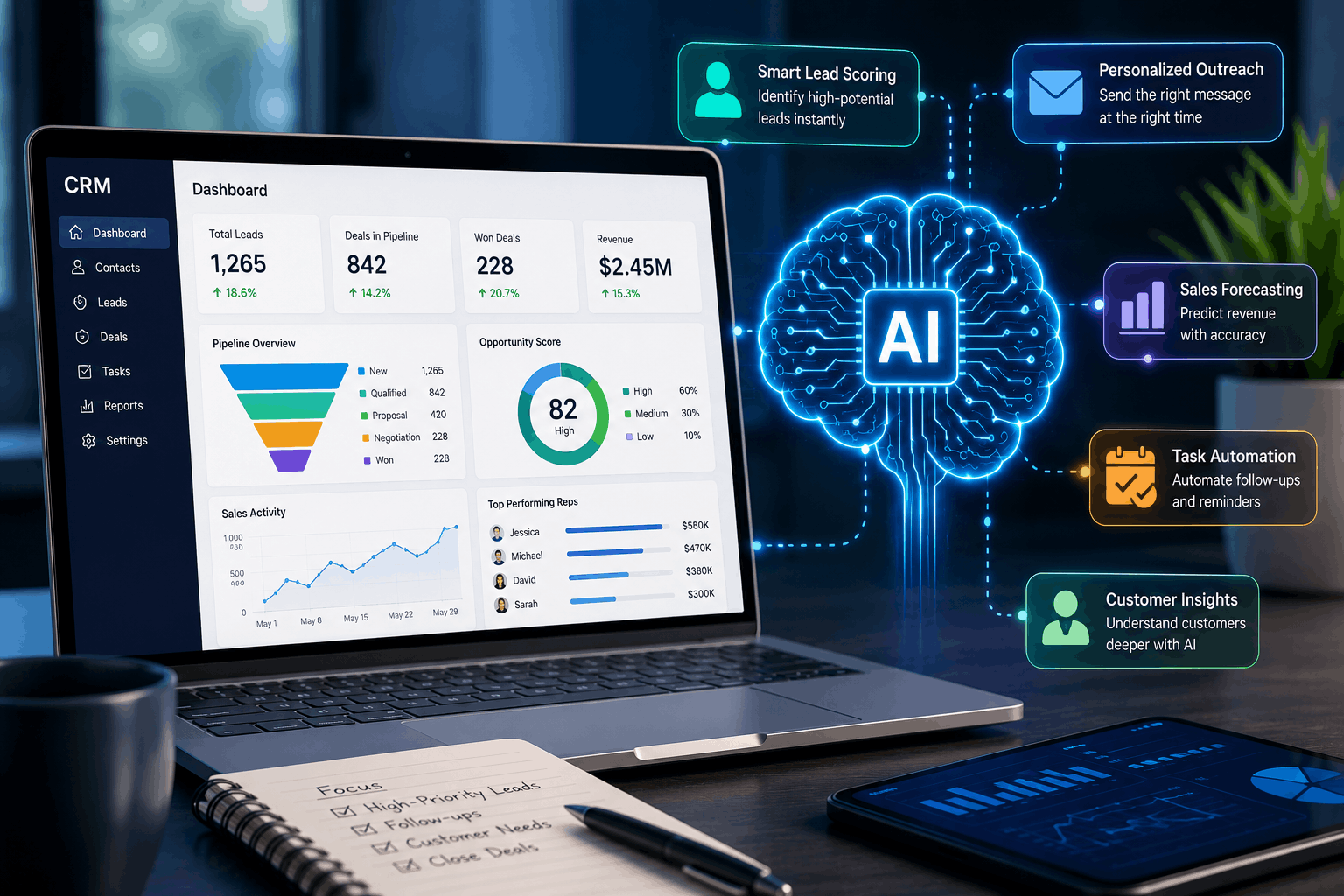
While AI CRM is revolutionising sales, it’s likely not in the way many people think. The benefit that comes with it is not to eliminate salespeople or automate all interactions with customers. It’s making repetitive tasks a thing of the past and helping teams focus on building links that generate revenue. AI CRM can streamline the identification of buying signals, prioritise data, and suggest the appropriate next steps, eliminating the need for manual sorting, record updates, and guesswork.
Suppose you were to report to work Monday morning.
Your CRM already has the information on which prospects visited your pricing page over the weekend. It shows you customers who haven’t been followed up on, which deals are lagging, and chances of deals that are likely to close this month.
This kind of knowledge helps salespeople to make better decisions without having to sift through dozens of customer records.
What Makes AI CRM Different From Traditional CRM?
Even the old-fashioned CRM programs are great at storing information.
Records emails, meeting notes, contact information, sales activities and customer history.
It’s just that someone still needs to ‘decode’ all that information.
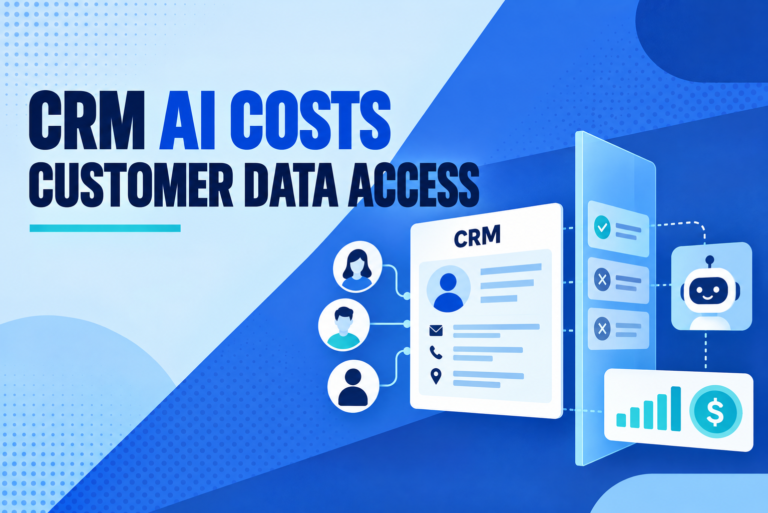
An AI powered CRM takes it one step further.
It doesn’t just gather data, it also analyzes customer behavior, looks for patterns, forecasts and suggests actions.
It’s like taking out a digital filing cabinet and replacing it with an intelligent assistant.
Instead of asking ‘where’s this customer’s information’, sales teams start asking ‘what should I do next?’.
That insignificant margin dictates the sales method of the business.
Why Sales Teams Lose Opportunities
Most businesses don’t struggle because they lack leads.
They struggle because opportunities slip through unnoticed.
A prospect downloads a buying guide.
Someone else requests pricing information.
Another customer opens five emails but never receives a follow-up.
These situations happen every day.
Not because sales teams don’t care.
Because they have too much information to process manually.
This is where CRM with AI becomes valuable.
Instead of relying on memory or spreadsheets, the system automatically identifies important activities.
It recognizes which prospects are becoming more engaged and which deals need immediate attention.
How AI Sales Automation Saves Time
Ask almost any salesperson how much time they spend selling.
The answer may surprise you.
Administrative work often takes up a large part of the day.
Updating customer records.
Scheduling follow-ups.
Writing meeting summaries.
Creating reminders.
Logging activities.
Each task only takes a few minutes, but together they consume hours every week.
AI sales automation reduces much of that workload.
Meeting notes can be summarized automatically.
Follow-up reminders appear without manual scheduling.
Customer interactions are recorded in the CRM with minimal effort.
Instead of acting like administrators, sales professionals spend more time having conversations with potential customers.
Smarter Lead Prioritization
Every lead is different.
Some visitors are casually researching.
Others are actively comparing solutions.
Treating every prospect the same usually leads to wasted effort.
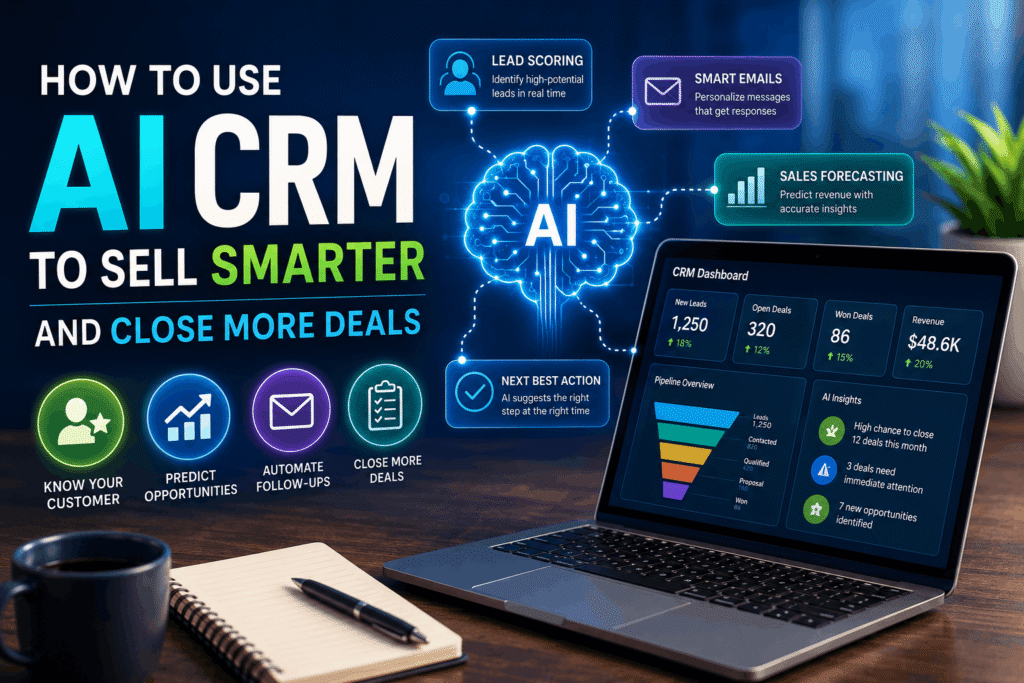
Modern AI sales tools analyze multiple data points before recommending which leads deserve attention.
These signals may include:
- Website visits
- Email engagement
- Previous purchases
- Industry
- Company size
- Product interest
- Sales history
Instead of having sales teams manually evaluate hundreds of records, AI continuously updates lead priorities based on customer behavior.
That allows businesses to focus on opportunities with the highest probability of converting.
Better Customer Conversations
Customers expect businesses to remember previous interactions.
Nobody enjoys repeating the same information every time they speak with a company.
An intelligent CRM combines information from emails, meetings, support tickets, website visits, and previous purchases into a single customer profile.
Before making a call, sales representatives already understand:
- Recent conversations
- Product interests
- Support history
- Marketing interactions
- Previous purchases
The result is a smoother conversation.
Instead of gathering basic information, sales teams can focus on solving problems.
Customers notice the difference.
Personalization Without Extra Work
Personalization sounds simple until a business has thousands of contacts.
Sending customized emails manually isn’t realistic.
An AI-powered CRM makes personalization much easier.
The system groups customers according to behavior rather than assumptions.
For example:
A first-time visitor may receive educational resources.
A returning prospect might receive a product comparison.
An existing customer could receive upgrade recommendations based on previous purchases.
Every message feels more relevant because it’s based on actual customer activity.
That often leads to higher engagement and stronger relationships.
How AI Customer Relationship Management Improves Lead Scoring
Traditional lead scoring relies on fixed rules.
A business might assign:
- 10 points for downloading a guide.
- 20 points for attending a webinar.
- 30 points for requesting a demo.
While helpful, those rules rarely reflect changing customer behavior.
AI customer relationship management continuously analyzes successful sales patterns.
It learns which activities usually lead to purchases.
Customers from healthcare respond differently from those in manufacturing.
Prospects who revisit pricing pages twice within one week convert much more frequently.
Instead of relying on static scoring rules, AI updates recommendations using real customer data.
That creates more accurate sales team priorities.
Forecasting Sales With Greater Confidence
Forecasting is one of the most difficult responsibilities for sales managers.
Every quarter begins with estimates.
Some opportunities close sooner than expected.
Others remain in the pipeline for months.
An AI CRM improves forecasting by evaluating historical sales data alongside current customer activity.
Rather than relying only on personal judgment, managers receive predictions supported by measurable trends.
The system may detect that similar deals usually require another two weeks.
Or it might identify opportunities showing unusually strong buying signals.
Better forecasting leads to better planning.
Common Mistakes Businesses Make
Introducing AI doesn’t automatically improve results.
Several mistakes appear repeatedly.
Poor Data Quality
AI depends on accurate information.
Duplicate contacts, incomplete customer records, and outdated information reduce the quality of recommendations.
Cleaning CRM data before implementation often produces better long-term results.
Automating Too Much
Automation should remove repetitive work.
It shouldn’t remove human relationships.
Customers still expect empathy, thoughtful advice, and genuine conversations.
The strongest businesses combine automation with personal communication.
Ignoring Employee Training
Some organizations purchase new technology without explaining how employees should use it.
Sales teams become confused.
Adoption slows.
Simple training sessions and clear workflows improve results.
Measuring the Success of AI CRM
The success of AI CRM should be measured using business outcomes rather than software usage alone.
Useful metrics include:
- Lead response time
- Opportunity conversion rate
- Average deal size
- Customer retention
- Revenue per salesperson
- Sales cycle length
- Follow-up completion rate
- Forecast accuracy
Tracking these numbers before and after implementation makes it much easier to understand the value AI brings to the sales process.
Traditional CRM vs AI CRM
| Traditional CRM | AI CRM |
| Stores customer information | Analyzes customer behavior |
| Manual follow-up scheduling | Intelligent follow-up recommendations |
| Static reports | Predictive insights |
| Basic lead scoring | AI-driven lead scoring |
| Manual forecasting | Predictive forecasting |
| Employee-managed workflows | Automated workflow suggestions |
The difference isn’t that one replaces the other.
An AI CRM builds on the foundation of traditional CRM by helping businesses make better decisions with the information they already collect.
Sales will always depend on trust, communication, and relationships.
Technology cannot replace those qualities.
What it can do is remove the repetitive work that often keeps sales professionals away from customers.
When businesses use AI for sales alongside experienced teams and well-designed processes, they deliver faster responses, more meaningful customer interactions, and a sales pipeline that’s easier to manage from first contact to close.