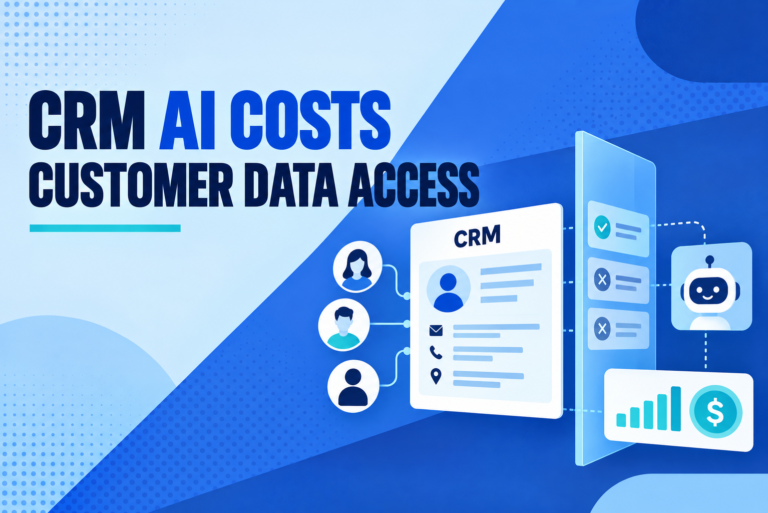
An agent that can read customer records, call cloud services and take action needs more than a working demo. AI cloud security means being able to show, before release, which identity the agent uses, what it can touch, how each action is recorded and how access can be stopped. If those answers depend on a developer remembering which permissions were added during testing, the agent is not ready for production.
A 2026 Cloud Security Alliance survey found that 68% of responding organizations could not clearly tell agent activity from human activity, while 74% said agents often receive more access than needed. The survey was commissioned by an identity-security vendor, so its findings should be read as a survey of respondents, not a universal rate. Still, the gap it describes is a useful warning: teams can deploy agents faster than they build identity and access controls around them.
What AI cloud security has to control
A cloud agent is not only a model endpoint. It is a chain of parts: the model, its instructions, retrieved data, tools, credentials, cloud services and the workflow that calls them. A weakness in one part can give an attacker or a misled agent a path to data or actions beyond the task. OWASP lists prompt injection and excessive agency among the risks for generative AI applications, and its 2026 agentic risks guide treats autonomous systems as a distinct security concern.
Consider an assistant that reads support tickets and can issue refunds. A customer message could contain text designed to alter the agent’s instructions. If the agent can also export records or change account settings, a single manipulated request has a wider reach than the refund task requires. The control question is not whether the model is clever. It is whether every tool call has boundaries outside the model’s own judgment.
Give each agent its own identity
Do not let agents run as a human employee or under a shared service account with broad permissions. Give each workload a distinct, attributable identity with clear ownership. That identity should describe the agent’s purpose and owner, and be easy to disable when a project ends or a credential is suspected of exposure.
The Cloud Security Alliance’s 2026 study found that some organizations use shared accounts or human identities for agents, making it harder to attribute actions. Separate identities let security teams see which agent made a request, which service granted it and which records it touched.
For AI agent security, identity should be paired with short-lived credentials where the platform allows it. Avoid secrets copied into prompts, source code, notebooks or long-lived environment variables. Store credentials in a secrets manager, rotate them, and log their issuance and use. If an agent calls another agent, preserve the identity of the original requester across the delegation rather than letting the downstream system see only a generic bot account.
Limit what tools and data can do
Build the agent’s permission set around its specific task. A document summarizer may need read access to one approved storage location, but not delete rights or access to every customer folder. A billing agent may prepare a credit for review without having authority to send funds. Use separate roles for reading, drafting and committing changes.
This is cloud security for AI agents in concrete terms: restrict service accounts, API scopes, network routes and data sources. Apply least privilege at the cloud identity layer and again inside the application. If the model can call a search tool, the tool should still enforce the user’s access rules. Do not assume a prompt saying “only use approved files” is a security boundary.
Keep tools narrow. Instead of exposing a general-purpose shell, offer a specific operation with validated inputs and a limited output. Put approval gates around actions that change money, permissions, customer status or production infrastructure. OWASP’s excessive-agency guidance warns against giving a model unnecessary functionality, permissions or autonomy. A human approval step is useful when the action is consequential, but it should not replace technical restrictions that prevent unsafe calls.
Treat retrieved text as untrusted input
Agents often read email, web pages, tickets, documents and code. Some of that content may contain instructions that conflict with the system’s intended task. Prompt injection happens when untrusted content tries to steer the model into ignoring its instructions or taking an unintended action. Filtering text can help, but it cannot guarantee that a model will always distinguish instructions from data.
Keep retrieval and action separate. Let the model summarize a document, but make a separate policy check decide whether a proposed action is allowed. Validate tool arguments against a schema. Reject unexpected fields, malformed identifiers and requests outside the agent’s assigned records. Require confirmation before external communication or irreversible changes. These checks should run in application code or a policy layer, not only in the model prompt.
Protect cloud data and network paths
Map what the agent can read, where prompts and outputs are stored, and which services receive them. Sensitive records can leak through logs, traces, analytics tools or third-party model APIs if teams do not review those paths. Apply data minimization before retrieval, redact fields that are not needed for the task, and set retention rules for prompts and generated content. OWASP includes sensitive information disclosure among its LLM application risks.
Place agent workloads in a segmented environment. Allow outbound connections only to required endpoints, and keep development, staging and production credentials separate. A tool that can reach arbitrary URLs or internal services can become a route around the controls that protect the rest of the cloud account. Monitor unusual destination changes and unexpected data volume, not only failed logins.
Log actions and rehearse the stop button
Record the request, agent identity, model and tool versions, retrieved sources, policy decision, tool call, result and human approval where applicable. Keep enough information to reconstruct what happened without collecting sensitive content unnecessarily. Logs need access controls and retention limits too; a detailed audit trail can become another store of confidential information.
Before launch, test cases should include a malicious instruction inside retrieved content, a revoked credential, an unavailable tool, an oversized request and an action the agent is not allowed to take. Confirm that each case fails safely and leaves a record. Test the shutdown path as well: revoke the agent identity, cancel active sessions and block downstream credentials. CSA’s survey found that organizations commonly rely on disabling identities or tokens to contain problems, while fewer reported changing policies in real time. That makes revocation speed worth measuring, not merely documenting.
Make AI security controls part of release approval
A production review should ask for evidence, not reassurance. Show the agent’s identity and owner. Show its allowed tools and data sources. Demonstrate that a denied action stays denied even when the prompt asks for it. Show where credentials live, how they expire and who can revoke them. Then walk through an audit record for a test action.
AI governance gives those decisions owners and review dates. NIST’s AI Risk Management Framework offers a voluntary way to organize AI risk work across governance, mapping, measurement and management. It is not a cloud security checklist, but teams can use it to assign responsibility, document the context of use, test known risks and revisit controls after material changes. A change to the model, tool, retrieval source or permission set can alter the risk, so approvals should attach to a specific version rather than a product name alone.
A secure AI deployment has a defined owner for each layer: cloud identity, application permissions, model configuration, data access, monitoring and incident response. Small teams may assign several roles to one person, but someone must own each decision. Recheck access after a role change, vendor update or workflow expansion. If the agent’s scope grows, run the tests again before giving it the new permissions.
Production is not a badge a demo earns. It is a point where the controls have been exercised, logs make actions attributable, and the team can cut access without waiting for the model to cooperate.