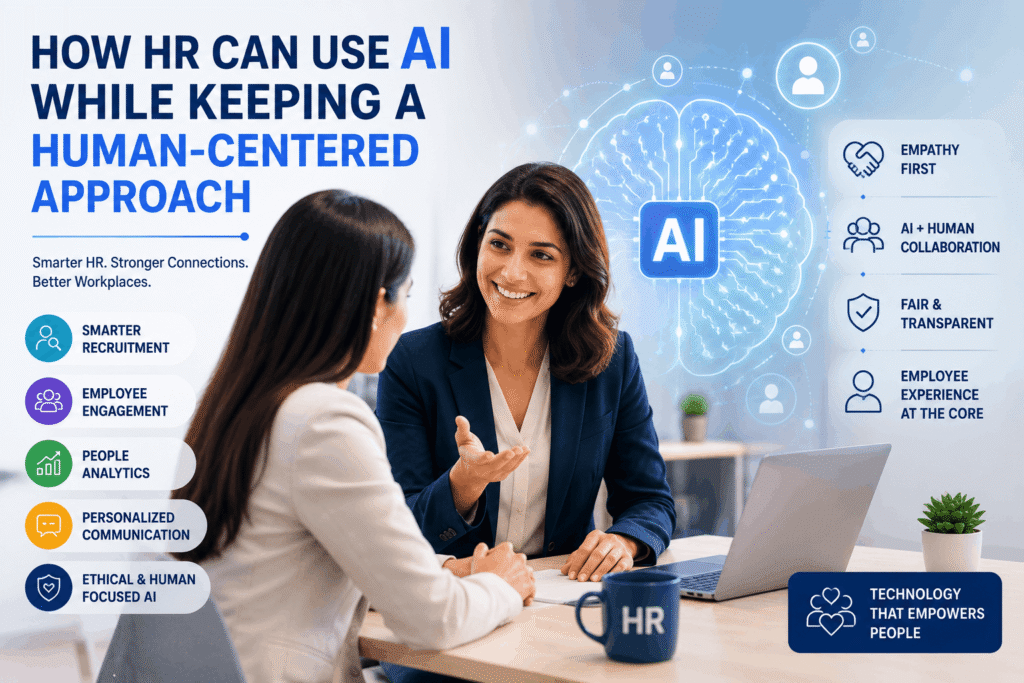
The rapid upward push of synthetic intelligence inside the workplace has created exhilaration and concern in human resources departments. While AI promises more performance and smarter selection-making, many HR specialists worry it is able to make offices feel colder and less personal. The answer lies in adopting a thoughtful HR AI Human-Centered Approach, one which uses generation to beautify human connections instead of updating them.
This balanced approach facilitates agencies harnessing the energy of AI in HR while preserving empathy, accept as true with, and actual relationships that make paintings significant. In this article, we explore practical ways HR teams can integrate AI even as keeping humans at the heart of each procedure.
Why a Human-Centered Approach Matters in HR Technology
HR has usually been about human beings. From recruitment and onboarding to performance management and worker wellness, excellent HR work takes place through information, empathy, and personal connection. As HR Technology evolves, agencies that neglect this core principle risk growing disengaged workforces and high turnover.
A strong HR AI Human-Centered Approach recognizes that AI must serve as a powerful assistant, no longer the selection-maker. When carried out thoughtfully, it frees HR experts from repetitive responsibilities with a purpose to focus on strategic, empathetic paintings that without a doubt influences worker lives. This stability leads to higher Employee Engagement, more potent business enterprise way of life, and stepped forward business effects.
Best Practices for Implementing AI in HR with a Human Touch
Successful organizations follow several key principles when adopting an HR AI Human-Centered Approach:
1. Start with Human Needs, Not Technology Capabilities
Before implementing any AI tool, ask what real human problems it needs to solve. Is the hiring process too slow? Are managers struggling with performance conversations? Are employees feeling disconnected? By beginning with people’s actual needs, you ensure AI in HR serves a meaningful purpose rather than becoming another flashy gadget.
2. Keep Humans in the Loop for Important Decisions
AI excels at processing large amounts of data and spotting patterns, but it lacks emotional intelligence, context, and ethical judgment. The best HR AI Human-Centered Approach keeps humans making final decisions, especially in areas like hiring, promotions, discipline, and conflict resolution. AI can provide insights and recommendations, but people should retain authority.
3. Use AI to Reduce Administrative Burden
One of the greatest gifts of HR Automation is the elimination of tedious paperwork and repetitive tasks. AI can handle resume screening, interview scheduling, benefits enrollment, and routine queries. This gives HR teams more time for meaningful interactions, career coaching, mentoring, and supporting employee wellbeing.
Using AI in Recruitment While Staying Human-Centered
AI Recruitment tools have transformed talent acquisition, but they must be used carefully to avoid bias and maintain fairness.
Modern HR AI Human-Centered Approach in hiring involves:
- Using AI to widen candidate pools and reduce unconscious bias in initial screening
- Combining AI assessments with human interviews that focus on cultural fit, values, and potential
- Providing candidates with transparent communication about how AI is used in the process
This balanced method helps organizations find better talent while treating every applicant with dignity and respect.
Enhancing Employee Experience with AI
AI Employee Experience initiatives can significantly improve how people feel at work when designed with care.
For example, AI-powered chatbots can answer common HR questions instantly, giving employees quick support while HR professionals handle more complex needs. Personalized learning recommendations help employees grow in their careers, while AI-driven wellbeing tools can suggest resources based on patterns of anonymous feedback.
The key is ensuring these tools feel supportive rather than surveillance-like. When employees understand how AI helps create better experiences, they’re more likely to embrace it.
Boosting Employee Engagement Through Smart Technology
Employee Engagement remains a top priority for HR leaders. A thoughtful HR AI Human-Centered Approach uses AI to strengthen connections rather than replace them.
AI can analyze engagement survey data to identify trends and potential issues early. It can help managers craft more meaningful recognition messages or suggest team-building activities based on employee preferences. However, the actual recognition, conversations, and relationship-building must come from humans.
Many companies now use AI to help design personalized career paths while ensuring managers have regular, authentic check-ins with their teams. This combination of smart insights and genuine human interaction creates deeper engagement.
Overcoming Challenges in HR AI Implementation
Adopting an HR AI Human-Centered Approach is not without challenges. Common concerns include data privacy, potential algorithmic bias, and employee resistance to new technology.
To address these:
- Be transparent about how AI is used and what data is collected
- Regularly audit AI systems for bias and fairness
- Involve employees in the selection and implementation process
- Provide proper training so everyone feels confident using new tools
Organizations that communicate openly and prioritize ethical AI practices build greater trust during digital transformation.
Real-World Examples of Successful HR AI Human-Centered Approach
There are a few innovative firms that have shown the way forward in integrating AI into HR practices while maintaining a caring, compassionate approach. One global organization opted to use AI to automate administrative tasks, enabling HR teams to dedicate “human hours” to employee support and development discussions. This led to increased satisfaction scores and a decrease in turnover.
Another firm adopted the AI skills assessment process and complemented it with a structured interview process of humans to prioritize potential and cultural contribution. This approach was both well-balanced and enhanced the quality of hires without compromising candidate experience.
From these examples, you can see that AI is not about replacing people’s practices but about enhancing them – it is the enabler of a better people practice, with a Human-Centered HR philosophy.
The Future of HR with AI
In the future, HR departments that excel will be those that learn to combine intelligent technology with a real understanding of people. HR Technology will keep progressing and provide ever-more sophisticated tools for prediction, personalization, and automation.
But it will be the organizations that remember the basics of HR: supporting people who will succeed. The sweet-spot of HR AI Human-Centered Approach is the amalgamation of efficiency and empathy, and technology that serves humanity.
Human Resource leaders who adopt this kind of thinking will be instrumental in creating workplaces supported by intelligent systems and cared for by other humans. This is the future of work – good for both the organization and the employee.
HR teams can navigate the exciting opportunities of artificial intelligence while still keeping the human touch by focusing on real human needs, being transparent, and ensuring that humans are in control of the important decisions, rather than AI.
White-labeled casino software is a solution designed for rapid market introduction, allowing the casino owner to focus on client acquisition, brand, and advertising.