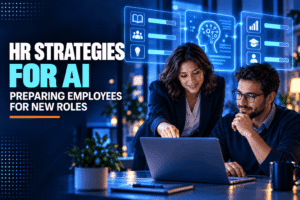
The debate surrounding AI and HR is getting hotter each year, and in 2026, it is in full blaze. Some HR leaders believe it is a game-changer that will finally free them from administrative work. Others fear it could dehumanise what they should be championing: people. So, what is really happening? Is there any real value in AI for HR, or is it just a lot of noise? Once you look at the real-life applications, benefits, challenges and measurable outcomes, it is obvious that artificial intelligence in HR works when it is done right. It is not magic; it is a powerful enablement that empowers human judgment.
What Is AI in HR?
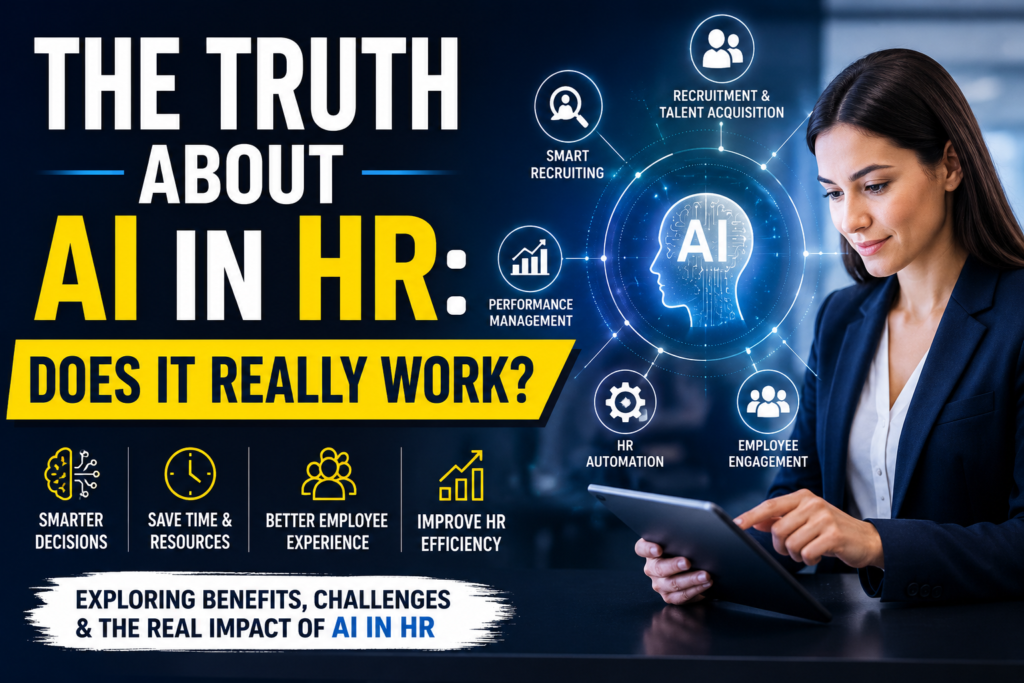
AI in HR is the application of AI technologies, such as machine learning, NLP, predictive analytics, and automation, to assist with or improve HR tasks. This is so much more than just a chatbot. Advanced HR software with AI can sift through thousands of resumes in a matter of seconds, forecast employee turnover, tailor training programs, and even contribute to creating equitable pay scales.
The idea of AI in HR is to handle tedious, information-intensive tasks so HR workers can focus on higher-level, empathetic work, which is more significant to organizational culture and staff well-being. By 2026, smart HR technology will have become well-developed and will have tangible solutions, not promises!
How AI Is Transforming Human Resources
The shift is seen in numerous organizations. Common tasks that used to take days or weeks are now completed in minutes. From onboarding documents to benefits enrollment, HR automation software does it all, and does it well. Predictive models use workforce data to forecast hiring needs, identify skills gaps, and propose internal mobility opportunities before employees begin searching for new roles.
The exciting thing about this transformation is that it could make HR more proactive. AI in HR can help teams detect trends and prevent issues such as high employee turnover or engagement, rather than waiting until after employees leave or become engaged. The best and most important transformation that AI brings to HR is its shift from administration to strategic partnership.
Benefits of AI in HR
There are many benefits to using AI in HR, and they are well-documented. The first is the huge boost in efficiency. The sending of resumes, scheduling interviews and initial messaging to candidates can be automated, saving 30-50% of the time-to-hire. This enables recruiters to focus on building relationships with the best candidates instead of drowning in applications.
Another significant benefit is the cost savings. AI recruitment tools and AI hiring solutions can reduce administrative costs and improve candidate quality. Additionally, organizations achieve stronger diversity results with correctly trained AI systems that eliminate unconscious bias from the initial screening process.
This helps to improve employee experience as well. Employee management AI can offer tailored learning and development suggestions, recommend wellness resources, and provide managers with instant feedback. It would be hard to achieve this level of customization at scale without AI-powered HR systems.
One of the greatest advantages is the ability to make data-driven decisions. Smart HR technology transforms mountains of employee information into meaningful, actionable insights. HR leaders can now predict employee attrition, monitor real-time engagement, and align hiring initiatives and strategies directly with business objectives.
Challenges and Risks of AI in HR
While the benefits of AI in HR are evident, there are risks involved with its use. Algorithmic bias is a primary concern. AI systems can inadvertently perpetuate historical prejudices when trained on historical data, such as a preference for certain demographics in hiring. This is a lesson many organizations have learned. Thus, regular auditing and the use of a variety of training sets are now top priorities.
Data privacy is also an important challenge. Access to sensitive employee data is essential for AI in HR, raising valid concerns about security and consent. There are legitimate concerns about the security and consent required to handle sensitive employee data for AI in HR. Regulations such as GDPR and new AI-specific laws require careful attention and robust governance measures.
Then there’s the fear of losing one’s job – a very human fear. The role of AI in HR is primarily about automating repetitive tasks rather than replacing specific job roles. Rather, it alters them. Those HR professionals who adopt smart HR technology can make their work more strategic and impactful. The ones who defy might face problems with shifting expectations.
Last but not least, AI-generated content, if not carefully monitored by human agents, can tarnish trust. Employees want to be aware of AI use and the decision-making process. Keeping things transparent is still key to retaining trust and involvement.
AI in the Recruitment and Talent Acquisition Process. AI’s role in recruitment and talent acquisition.
AI in Recruitment and Talent Acquisition
The area where AI’s impact in HR is most evident and impactful is recruitment. AI recruitment software can analyze resumes, assess skills, and even undertake preliminary video interviews with notable precision. The next step in AI hiring tools is to evaluate cultural fit by recognizing keywords in resumes, messages, and job applications, and to forecast success by analyzing past performance data.
These tools are not intended to replace human recruiters. They do, instead, the high volume, repetitive work so that recruiters can take the time to engage in meaningful conversations with candidates. By leveraging AI in HR alongside people’s expertise and experience, many organizations have achieved a 30-40% reduction in recruiting costs and improved hire quality.
Real Examples of AI in HR
Real-life success stories dispel the myths. A few big companies have adopted AI-based HR systems and achieved great results. For example, organizations that have implemented predictive analytics have been able to reduce unwanted employee turnover by catching employees at risk of quitting months before it happens and intervening to address the underlying causes.
During the talent acquisition process, some businesses are now leveraging AI recruitment tools that not only help filter candidates but also send personalized messages and interview questions based on the position being filled. What has happened is that hiring cycles have shortened, and the right candidates have been hired for the right jobs.
Learning and development is another good example. AI-driven HR automation tools can suggest personalized training programs according to business needs and an employee’s career objectives. Staff say that they are more engaged with learning programmes when the learning content is personally relevant.
Future of AI in Human Resources
The future of AI in HR is even more promising. We will see increased use of generative AI to generate job descriptions, performance assessments, and personalized communication at scale. Multimodal AI systems that can understand text, speech, and even emotions will become more prevalent, making communication more natural and effective.
As external labour market data, economic indicators, and internal trends are incorporated into workforce management AI systems, the way these systems plan for workforce needs will become more sophisticated. The most successful companies will not confine AI in HR to being just another HR software, but rather treat it as a strategic capability.
But the human factor cannot be replaced. The best smart HR technology will complement human intelligence and not replace it. Empathy, ethical judgment, and creative problem-solving will remain the hallmarks of great HR leadership.
To learn more about how to be responsible and ethical with AI, explore AI resources from SHRM HR Resources. Other companies, such as IBM AI Solutions and Oracle HR Technology, offer more established platforms for enterprise applications.
Final Thoughts
So is AI for HR really working? The evidence in 2026 is yes, but with caveats. It should be used as a collaborative tool to do the routine work and deliver intelligent insights, which still leave humans to have the final say. When in a rush, without strategy, governance and training, organizations can get suboptimal results. Thoughtfully leveraging AI in HR can lead to huge efficiencies, better employee experiences and strategic value.
The reality of AI in HR is neither rosy nor doom-and-gloom. When paired with human wisdom, it is a powerful technology that can turn HR into more than just an administrative role and help it become a business success. It’s not about when to use AI in HR anymore; it’s about how.
HR leaders who adopt this balanced perspective will place themselves and their companies on the right path to achieve success in the ever-changing landscape of work. Smart HR technology is the future, and those who can use it will be in the vanguard of business.