Enterprise Data Pipeline Security is becoming one of the most critical concerns for businesses in 2026, as organisations transport terabytes of data through complex pipelines on a daily basis in today’s information-driven world. As data volumes continue to grow, so do the associated risks. Without proper protection, sensitive information can be exposed, manipulated, or stolen, leading to financial losses, regulatory penalties, and a significant loss of trust.
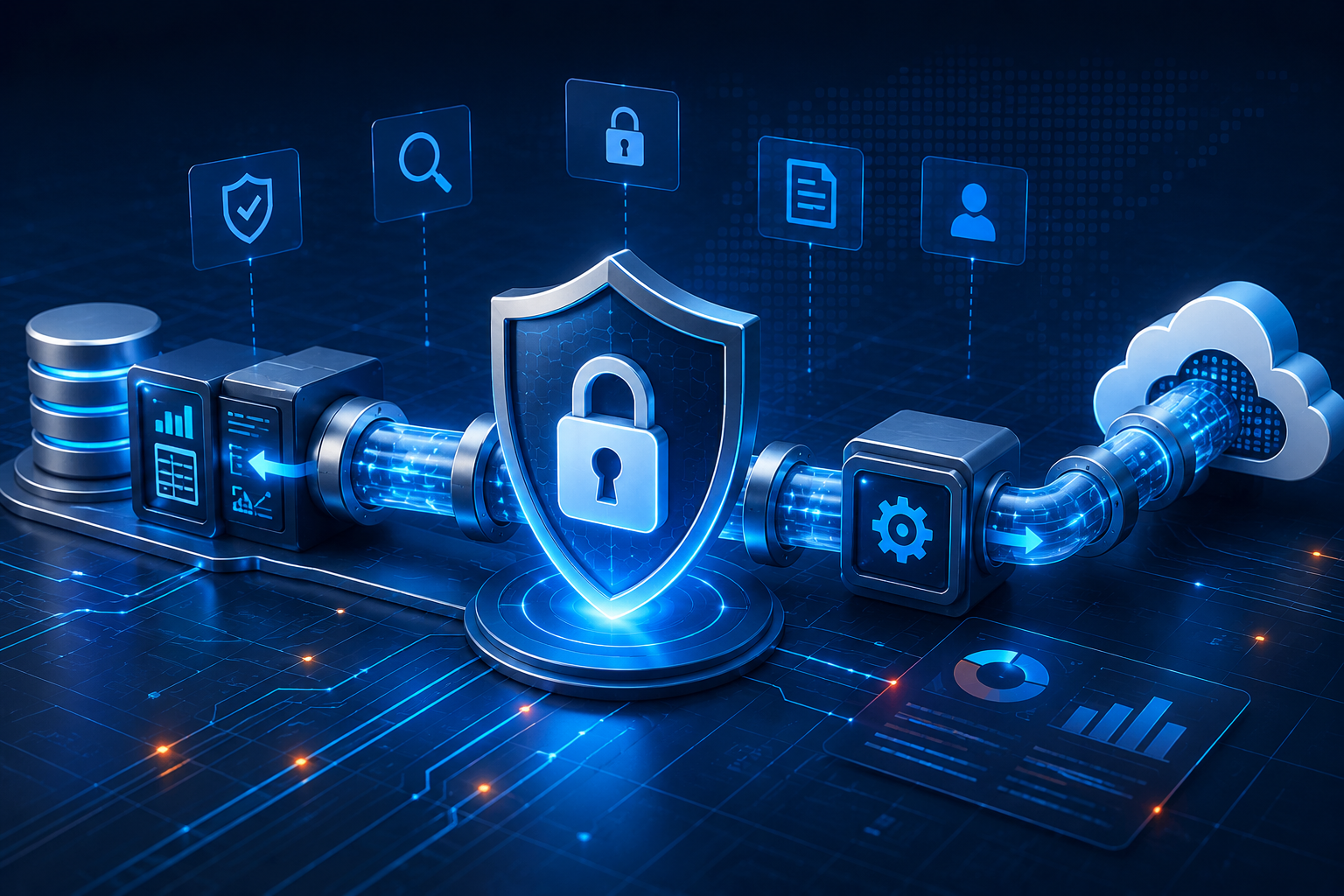
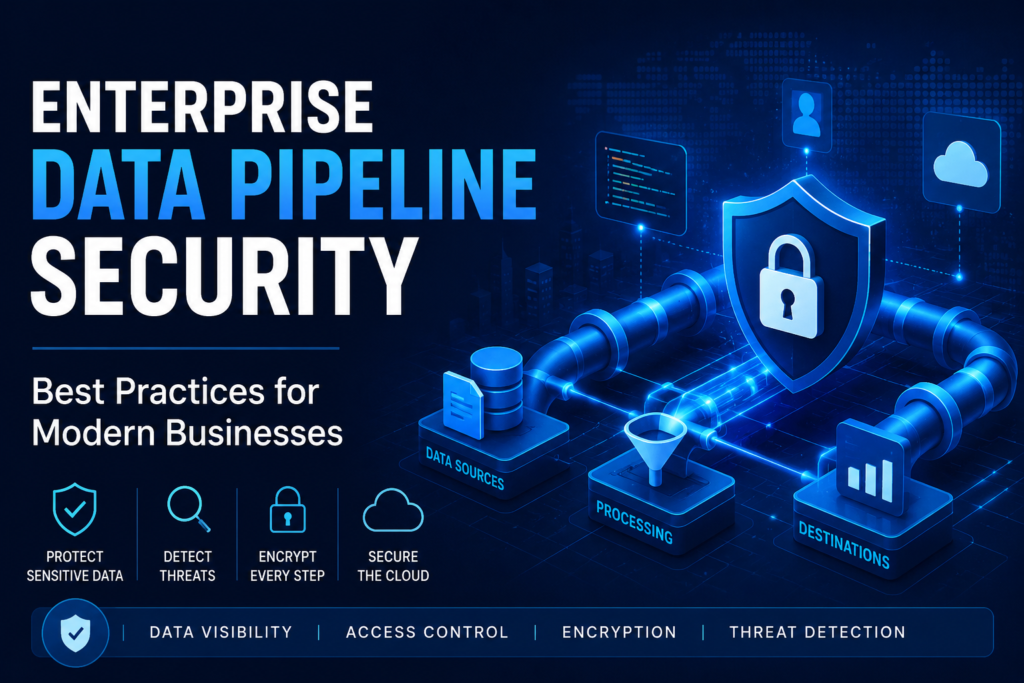
Security for enterprise data pipeline requires strong security measures to secure data from the source systems, while it is being processed, stored and sent to target systems. We’ll take a look at why it’s important, some of the common pitfalls, and some of the best practices to help keep your data pipelines safe.
Why Enterprise Data Pipeline Security Matters
Data pipeline security for enterprises is no longer a luxury, but a fact of life and a survival trait to ensure compliance. Real-time data pipelines are pivotal in enabling enterprises to leverage analytics, machine learning models, customer insights, and operational decisions. If these pipelines are breached, they can reveal information such as customer records, intellectual property or financial information.
In the era where new laws such as GDPR, CCPA and other data protection laws are coming into force, organizations must be prepared for significant penalties for security breaches. In addition to compliance, robust and secure enterprise data pipelines help customers gain trust and offer a true competitive edge. Companies that invest in the right security can operate faster and innovate with confidence, with a secure data foundation.
Common Risks in Enterprise Data Pipelines
Many organizations underestimate the vulnerabilities present in their data pipelines. Here are the most frequent risks:
- Data Interception and Leakage: Data moving between systems can be intercepted if encryption is weak or missing.
- Unauthorized Access: Poor access controls allow insiders or external attackers to reach sensitive data flows.
- Injection Attacks: Malicious code or data can be inserted into pipelines, corrupting information or stealing credentials.
- Misconfigured Cloud Services: Many pipelines now run in the cloud, where misconfigurations remain a leading cause of breaches.
- Supply Chain Vulnerabilities: Third-party tools and services integrated into pipelines can introduce hidden risks.
These threats make cloud data pipeline security and enterprise data security scanning essential components of any modern strategy.
Best Practices for Securing Data Pipelines
Implementing strong enterprise data pipeline security requires a layered approach. Here are proven best practices:
Implement End-to-End Encryption
Encrypt data both at rest and in transit. Use modern standards such as TLS 1.3 for data transmission and strong algorithms for data storage. This ensures that even if data is intercepted, it remains unreadable.
Adopt Zero-Trust Architecture
Move away from traditional perimeter security. Verify every access request regardless of origin. Implement strict identity verification, least-privilege access, and continuous monitoring for all pipeline components.
Use Robust Authentication and Authorization
Apply multi-factor authentication (MFA) and role-based access control (RBAC). Regularly review and revoke unnecessary permissions to reduce the attack surface.
Automate Security Scanning
Regular enterprise data security scanning helps detect vulnerabilities, misconfigurations, and anomalies early. Integrate automated scanning tools into your CI/CD pipeline for continuous protection.
Data Masking and Tokenization
For non-production environments, use data masking and tokenization to protect sensitive information while maintaining realistic test data.
Comprehensive Logging and Monitoring
Maintain detailed audit logs and deploy real-time monitoring solutions. Advanced tools can detect suspicious patterns and trigger automatic alerts or responses.
Cloud Security and Data Scanning Strategies
As most modern pipelines run on cloud platforms, cloud data pipeline security requires special attention. Major cloud providers offer native security tools, but organizations must configure them correctly.
Leverage Cloud-Native Security Features
Use services like AWS GuardDuty, Azure Security Center, or Google Cloud Security Command Center for continuous threat detection.
Implement Data Discovery and Classification
Automatically classify data based on sensitivity. This helps apply appropriate security controls based on data type and importance.
Regular Vulnerability Assessments
Conduct frequent scans of your entire pipeline infrastructure. Tools focused on enterprise data security scanning can identify weaknesses before attackers exploit them.
Secure API Connections
Most pipelines rely heavily on APIs. Use API gateways with proper rate limiting, authentication, and threat protection.
Backup and Disaster Recovery Planning
Maintain secure, encrypted backups with tested recovery procedures. This ensures business continuity even after a security incident.
For more insights on related topics, check our guide on cloud infrastructure security best practices.
Future Trends in Enterprise Data Protection
The field of enterprise data pipeline security continues to evolve rapidly. Here are key trends shaping 2026 and beyond:
- AI-Powered Threat Detection: Machine learning systems that can predict and prevent attacks before they happen.
- Privacy-Enhancing Technologies: Solutions such as homomorphic encryption and federated learning that enable data processing without exposing raw data.
- Automated Compliance Tools: Platforms that continuously monitor and ensure adherence to multiple regulatory frameworks.
- Decentralized Data Security: Blockchain-inspired approaches for better traceability and integrity of data flows.
Organizations that stay ahead of these trends will build more resilient and future-proof data pipelines.
Conclusion
Enterprise data pipeline security is a crucial component in establishing a reliable and efficient data ecosystem. All of the above best practices, from strong encryption to zero-trust principles, enterprise data security scans, and proactive security measures in the cloud data pipelines, can help organizations minimize risks without sacrificing performance.
Cost of security for investment is much less than the damage of any big breaches. Companies that embrace secure enterprise data pipelines as a strategic priority will be more likely to innovate, grow, and gain trust from customers in 2026.
First, do a pipe audit and determine your highest risk spots; then gradually step up your security measures. Security invested in enterprise data pipeline today will pay off in terms of protection, compliance and peace of mind.
For deeper technical guidance, refer to resources from the NIST Cybersecurity Framework and Cloud Security Alliance.