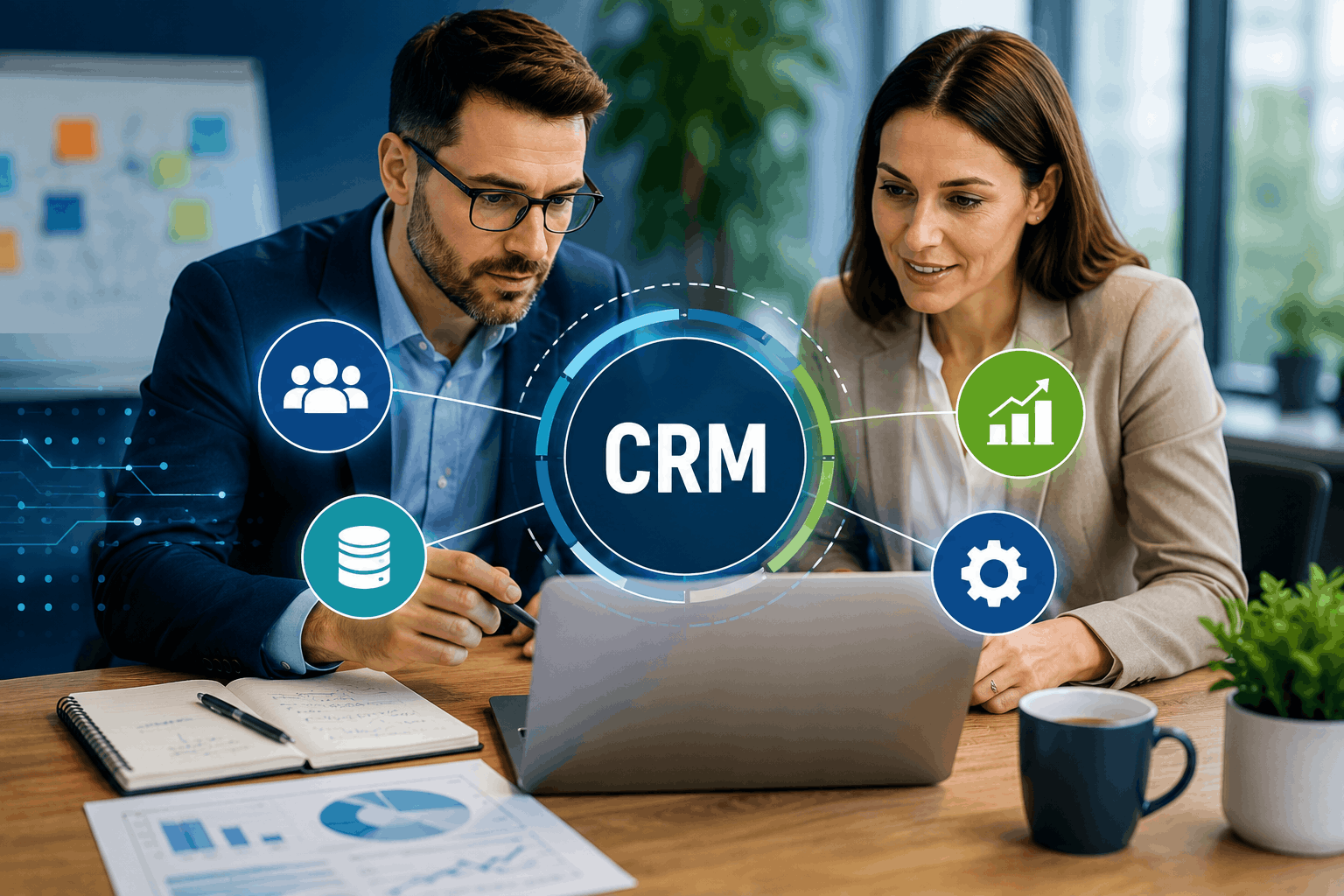
Businesses rarely decide to replace or upgrade a CRM system because the old software suddenly stops working. Most of the time, the problems build up slowly. Sales teams start using spreadsheets, marketing creates its own customer database, and support agents struggle to find accurate information. That’s when CRM Transformation becomes more than an IT project, it becomes a business priority.
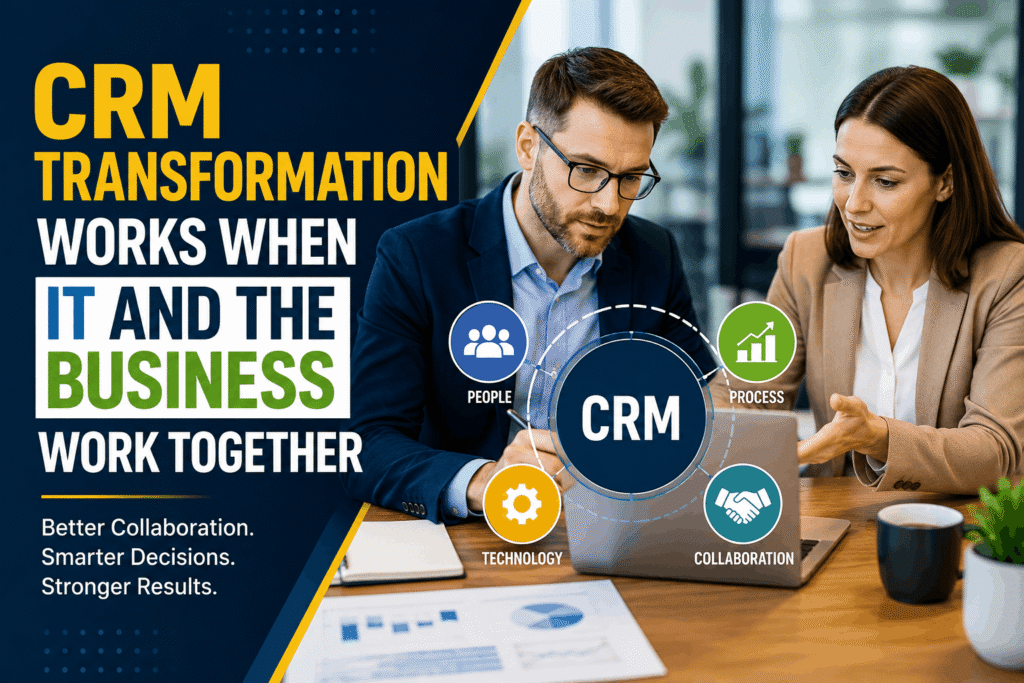
A successful CRM Transformation depends on people as much as technology. Companies that treat CRM as an IT-only initiative often run into delays, rising costs, and frustrated employees. When business leaders and technical teams work toward the same goals, the project has a much better chance of delivering results that everyone can see.
What Is CRM Transformation?
CRM Transformation is the process of changing how an organization manages customer relationships through better technology, cleaner data, and improved business processes. It isn’t just about installing new software. It also involves reviewing outdated workflows, fixing disconnected systems, and making sure every department has access to reliable customer information.
Think of a company where sales records live in one application, customer service uses another, and marketing stores leads somewhere else. Employees waste time searching for information instead of helping customers. A modern CRM brings those pieces together so every interaction starts with the same customer data.
The technology matters, but the way people use it matters even more.
Why CRM Projects Often Miss the Mark
Many organizations spend months planning a new CRM platform only to discover that employees continue using their old methods after launch.
That usually happens because the project focused on software instead of everyday work.
Some common issues include:
- Different departments setting conflicting priorities.
- Poor communication between business leaders and IT teams.
- Unclear project ownership.
- Employees receiving little training before launch.
- Existing customer data moving into the new system without proper cleanup.
A new CRM cannot solve problems that already exist inside an organization. If teams disagree about how customer information should be managed, those disagreements simply move into the new platform.
Why Business Teams Need a Seat at the Table During CRM Transformation
Business departments understand customers better than anyone else.
Sales representatives know where deals slow down.
Marketing teams understand how leads move through campaigns.
Customer support agents hear complaints every day.
IT professionals understand infrastructure, security, integrations, and performance. They make sure everything works behind the scenes. But they don’t always see how employees use the system during a busy workday.
During CRM Transformation, business users help answer practical questions such as:
- Which customer information matters most?
- What reports do managers actually use?
- Which manual tasks waste the most time?
- Where do customers experience delays?
Without those answers, developers often build features that look impressive but solve the wrong problems.
How IT Supports a Successful CRM Transformation
While business teams define requirements, IT turns those ideas into a secure and reliable system.
Their responsibilities usually include:
- Connecting the CRM with existing business applications.
- Protecting sensitive customer information.
- Managing user permissions.
- Monitoring system performance.
- Planning future upgrades.
- Maintaining integrations with email, finance, ERP, and support platforms.
These technical decisions affect employees every day, even if they never notice them.
For example, if customer records take several seconds to load or duplicate records appear during sales calls, productivity drops quickly.
Strong IT planning prevents these issues before users experience them.
Shared Goals Produce Better Results
The strongest CRM Transformation projects begin with shared business objectives instead of software features.
Rather than asking,
“Which CRM platform has the most features?”
successful organizations ask,
“Which business problems are we trying to solve?”
Those answers often include:
- Shorter sales cycles.
- Faster customer support.
- Better reporting.
- More accurate forecasting.
- Cleaner customer records.
- Less manual work.
Once everyone agrees on those outcomes, choosing technology becomes much easier.
Different departments stop competing for features and start working toward measurable business improvements.
Communication Prevents Expensive Mistakes
Large CRM projects involve dozens of decisions.
Sometimes hundreds.
Without regular communication, assumptions quickly replace facts.
Imagine a sales manager requesting a new approval workflow.
The business expects a simple process.
IT builds exactly what was requested.
After launch, employees discover the approval takes five extra steps because nobody discussed how the workflow actually works during busy sales periods.
Small misunderstandings like this become expensive when multiplied across an entire organization.
That’s why regular workshops, prototype reviews, and user feedback sessions remain valuable throughout CRM Transformation projects, not just during planning.
Helping Employees Embrace CRM Transformation
Even the best software struggles if people avoid using it.
That happens more often than many organizations expect. Employees don’t reject a CRM because they dislike technology. They usually resist because they’re unsure how the new system fits into their daily work.
A sales representative who has tracked deals the same way for eight years won’t change overnight. A support agent handling dozens of customer requests every day doesn’t want extra clicks slowing them down.
Successful CRM Transformation projects recognize these concerns early instead of treating them as an afterthought.
Practical training makes a noticeable difference. Rather than explaining every feature, organizations should focus on everyday tasks employees perform repeatedly. Showing a salesperson how to update an opportunity in seconds is far more valuable than demonstrating dozens of advanced settings they’ll rarely touch.
Why Clean Data Matters in CRM Transformation
No CRM system can produce reliable reports if the information inside it is inaccurate.
Many companies discover this during migration.
Customer records appear multiple times.
Old contacts remain active.
Phone numbers are outdated.
Important fields are missing.
Moving poor-quality information into a new platform only creates bigger problems later.
Before migration begins, organizations should review existing customer records and remove duplicates, archive outdated accounts, and establish consistent formatting standards.
During CRM Transformation, data cleanup often takes longer than expected, but it saves countless hours after launch.
Reliable information helps every department make better decisions.
Sales identifies genuine opportunities.
Marketing reaches the right audience.
Support agents immediately see complete customer histories.
Leadership Shapes Every CRM Transformation Project
Technology teams cannot carry a CRM initiative on their own.
Business leaders need to remain involved from planning through deployment.
Their role goes beyond approving budgets.
Leaders help departments agree on priorities when opinions differ. They remove roadblocks, encourage collaboration, and reinforce why the project matters.
Employees also pay attention to leadership behavior.
If managers continue relying on spreadsheets instead of the new CRM, teams quickly notice.
When executives actively use dashboards, reports, and customer insights generated from the system, adoption becomes much easier.
A successful CRM Transformation starts at the top and spreads through the organization.
How to Measure CRM Transformation Success
Launching a CRM isn’t the finish line.
The real question comes afterward.
Is the business actually performing better?
Organizations should track measurable outcomes instead of assuming success because the software is live.
Useful performance indicators include:
- Higher CRM adoption across departments.
- Faster lead response times.
- Better customer retention.
- Improved sales conversion rates.
- More accurate revenue forecasts.
- Fewer duplicate customer records.
- Reduced manual data entry.
- Faster case resolution for support teams.
Looking at these numbers over several months provides a clearer picture than relying on employee opinions alone.
Mistakes That Slow Down CRM Transformation
Organizations often repeat the same mistakes, regardless of industry.
Recognizing them early helps teams avoid unnecessary setbacks.
Treating CRM as an IT Project
When business departments stay on the sidelines, the final system rarely reflects how employees actually work.
Ignoring Employee Feedback
Users interact with the CRM every day.
Their observations often reveal practical issues that project teams overlook.
Skipping Data Cleanup
Migrating outdated customer information creates confusion from the first day.
Adding Too Much Too Soon
Some organizations try to introduce every feature at once.
A phased rollout usually gives employees more time to adapt while reducing implementation risks.
Failing to Define Success
Without clear business goals, it’s difficult to know whether the project delivered meaningful improvements.
The Future of CRM Transformation
Customer expectations continue to change, and CRM platforms are changing with them.
Artificial intelligence now helps teams summarize customer conversations, recommend follow-up actions, identify sales opportunities, and automate repetitive administrative work.
These capabilities can save time, but they don’t replace good business decisions.
Organizations still need accurate customer information, well-designed processes, and strong collaboration between departments.
That’s why future CRM Transformation projects will depend less on adding new technology and more on making better use of the technology already available.
Companies that encourage regular communication between business teams and IT are better prepared to adapt as customer needs evolve.
Instead of rebuilding processes every few years, they can refine and improve them over time.