In 2026, synthetic intelligence has moved from being an experimental device to a key driver of marketing success. Brands that strategically embrace AI in marketing are seeing extraordinary improvements in personalization, marketing campaign efficiency, customer engagement, and return on investment. However, many companies still feel beaten about where to begin. This comprehensive guide explores how ahead-thinking brands should begin their journey with AI Marketing whilst avoiding common pitfalls.
The integration of AI in Marketing is now not a luxury reserved for massive tech agencies. It has emerged as crucial for manufacturers of all sizes looking to remain aggressive in a hyper-customized, rapid-moving virtual landscape. From content creation to consumer segmentation and predictive analytics, AI Marketing offers powerful capabilities that can transform how brands connect with their audiences.
The Current State of AI in Marketing
AI in Marketing has advanced rapidly. Today, the main producers use artificial intelligence to generate high-quality replicas, create beautiful visuals, analyze extensive portions of customer data, and deliver real-time, personalized stories. What started as simple chatbots and easy advice engines has grown into brand-new systems capable of predicting consumer behaviour, optimizing ad spend, or co-growing campaigns with human teams.
Despite the delight, many manufacturers have faced traumatic conditions. Some early AI-generated campaigns received criticism for feeling common, off-brand, or missing authenticity. Others encountered criminal and moral problems associated with copyright, information privacy, and biased outputs. These critiques spotlight an important truth: fulfillment with AI in Marketing relies not on adopting every new device but on building a considerate, responsible basis.
Why Brands Must Start with AI Marketing in 2026
The commercial enterprise case for investing in AI Marketing has never been stronger. Consumers now expect particularly relevant, personalized experiences throughout every touchpoint. Brands that fail to deliver these stories risk dropping relevance and market proportion. AI in Marketing enables companies to process vast volumes of data and deliver tailored messages at scale, something not possible with conventional strategies alone.
Moreover, advertising groups face increasing stress to do more with fewer resources. AI Marketing tools help automate repetitive tasks, freeing creative professionals to focus on strategy, storytelling, and innovation. This shift results in better productivity, higher overall performance of marketing campaigns, and improved job satisfaction amongst advertising groups.
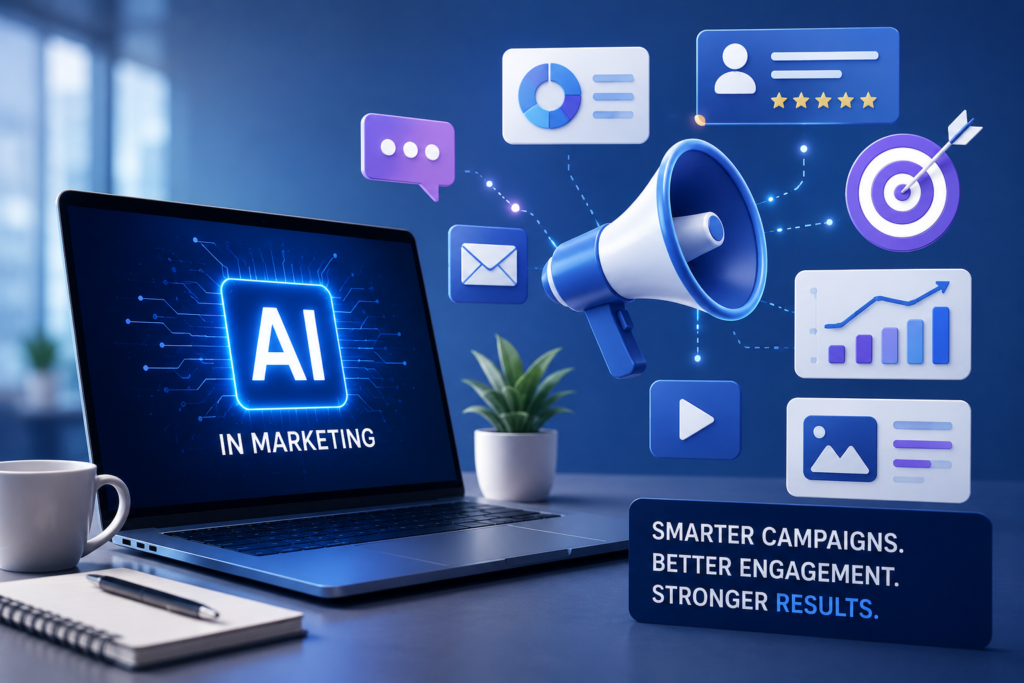
Where Brands Should Actually Begin with AI in Marketing
The most successful brands do not jump straight into complex AI projects. Instead, they start with clear foundations and build gradually. The first step is conducting a thorough audit of current marketing processes to identify areas where AI in Marketing can deliver the quickest wins with the least risk.
Many brands begin by implementing AI for content creation and optimization. Modern tools can generate blog drafts, social media captions, email subject lines, and product descriptions while maintaining brand voice. However, human oversight remains crucial to ensure quality and authenticity. This hybrid approach, combining AI efficiency with human creativity, forms the cornerstone of effective AI Marketing strategies.
Another smart starting point involves customer data analysis. AI in Marketing excels at identifying patterns in customer behaviour, segmenting audiences more accurately, and predicting future actions. Brands that start here often see immediate improvements in targeting precision and campaign ROI.
Personalization at Scale Through AI Marketing
One of the most powerful applications of AI in Marketing is hyper-personalization. Advanced systems can analyze individual preferences, browsing history, purchase patterns, and even real-time behaviour to deliver uniquely tailored experiences. This goes far beyond basic “if you liked this, you might like that” recommendations.
In 2026, leading brands use AI Marketing to create dynamic website experiences, personalized email journeys, and context-aware advertising that adapts based on user mood, location, and intent. The result is significantly higher engagement and conversion rates than with traditional one-size-fits-all approaches.
Automation and Efficiency Gains
AI in Marketing brings substantial automation benefits. Tasks that once consumed hours of manual work, such as A/B testing dozens of ad variations, scheduling social posts, or optimizing bidding strategies, can now run automatically with intelligent systems that make real-time adjustments.
This automation does not replace marketers. Instead, it elevates their role from execution to strategy. Creative teams can spend more time on big ideas. At the same time, AI handles the heavy lifting of testing, optimization, and performance analysis.
Building Responsible and Ethical AI Marketing Practices
As brands adopt AI in Marketing, they must address important ethical and legal considerations from day one. Issues around copyright ownership, data privacy, deepfakes, and algorithmic bias require careful attention.
Successful brands establish clear governance frameworks for their AI Marketing initiatives. This includes creating usage policies, implementing human review processes, conducting privacy assessments, and maintaining transparency with customers about AI-generated content. Those who prioritize responsible AI practices build stronger customer trust and reduce regulatory risks.
Measuring Success in AI Marketing Initiatives
To ensure AI in Marketing delivers real value, brands need robust measurement frameworks. Key performance indicators should go beyond surface metrics like click-through rates to include deeper measures such as customer lifetime value, brand sentiment, and marketing efficiency ratios.
Leading organizations set up dedicated dashboards that track both quantitative results and qualitative feedback. Regular audits help identify which AI Marketing tools and approaches are working best, so resources can be allocated more effectively.
Integration with Existing Marketing Technology
A common challenge when starting with AI in Marketing is integrating new tools with legacy systems. The most successful implementations begin with platforms that offer robust APIs and compatibility with popular marketing technology stacks. This ensures smooth data flow and prevents the creation of new information silos.
Many brands choose to start with AI features already built into their existing marketing platforms before investing in specialized standalone tools. This gradual approach reduces disruption and allows teams to build confidence with AI Marketing capabilities.
The Role of Human Creativity in AI Marketing
While AI has made significant strides, the human touch remains irreplaceable in AI Marketing. The best approaches involve using AI as a tool to complement, not supplant, human expertise. When creative teams learn to work together, they create something new yet truly human.
Brands need to focus on creating hybrid workflows in which AI handles initial generation and optimization. In contrast, humans handle strategic direction, emotional intelligence, and final approval. This is the optimal way to get the best marketing results.
Future Trends Shaping AI in Marketing
Looking ahead to earlier in 2026 and beyond, several interesting developments will further reshape AI Marketing. Multimodal AI structures capable of processing information and producing textual content, snapshots, video, and audio concurrently have become mainstream. Voice and conversational advertising and marketing powered by superior AI will create more natural customer interactions.
Additionally, real-time AI decision engines that adjust campaigns based on market conditions or consumer sentiment will offer early adopters a significant competitive advantage.
Building Your AI Marketing Strategy for Long-Term Success
There are steps that brands must take to adopt AI in Marketing. Invest in education and training – develop in-house capacity. Next, look for quick-win opportunities that show immediate value. Slowly move to more complex applications while maintaining strong governance and ethics.
It’s also crucial to invest in talent development. Marketing teams must have members who are familiar with creative excellence and AI capabilities. A successful partnership between marketing, data science, legal, and IT teams is vital to long-term success.
AI in Marketing is one of the strongest possibilities for brands in 2026. The ones who start with a clear strategy, responsible practices and an emphasis on improving, not replacing, human creativity will be best equipped to take advantage of the years to come.
The future is for brands that can use AI Marketing while remaining true to their values and staying authentically connected with their audiences. With careful planning now, companies can develop the skills to drive their sectors into the future.