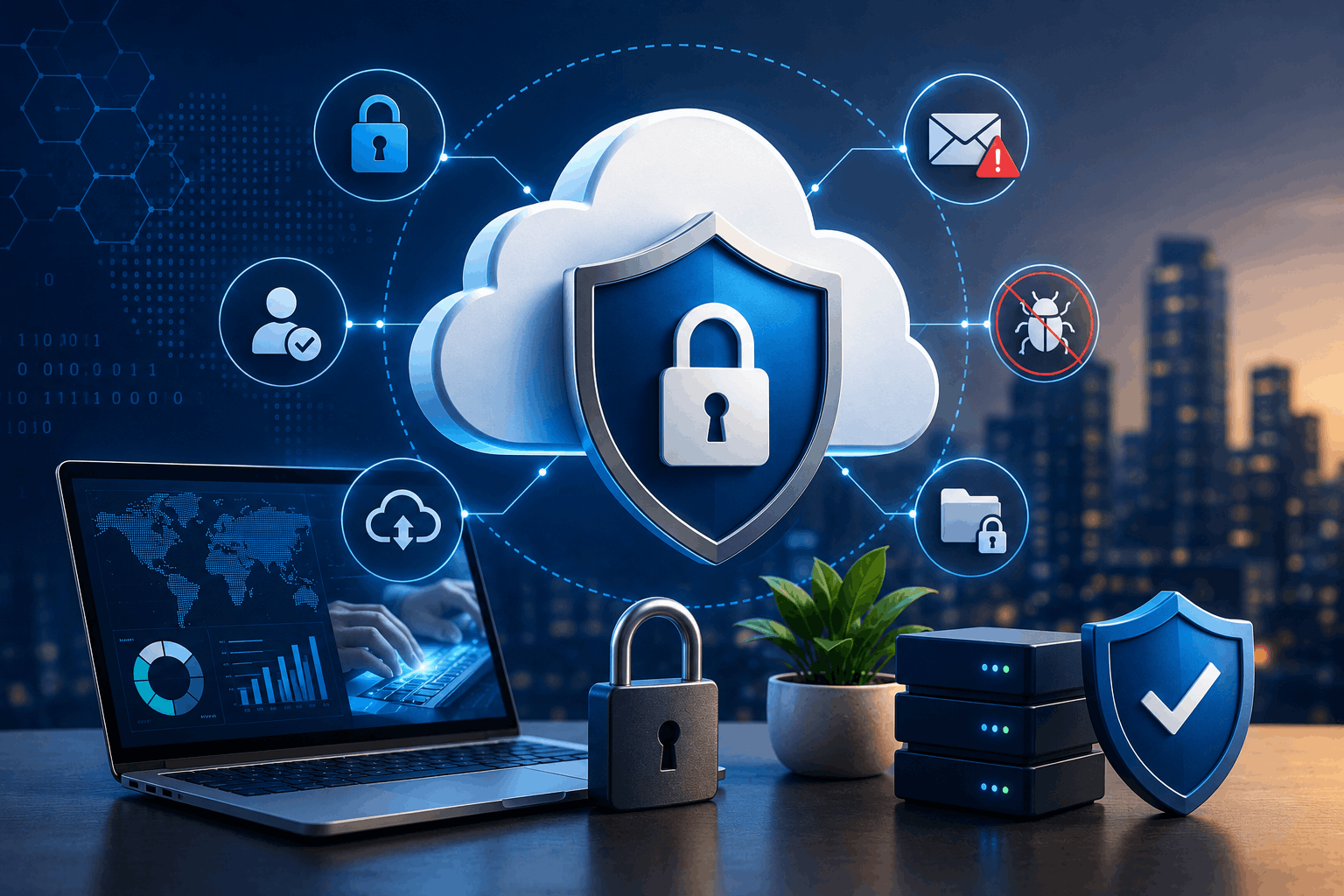
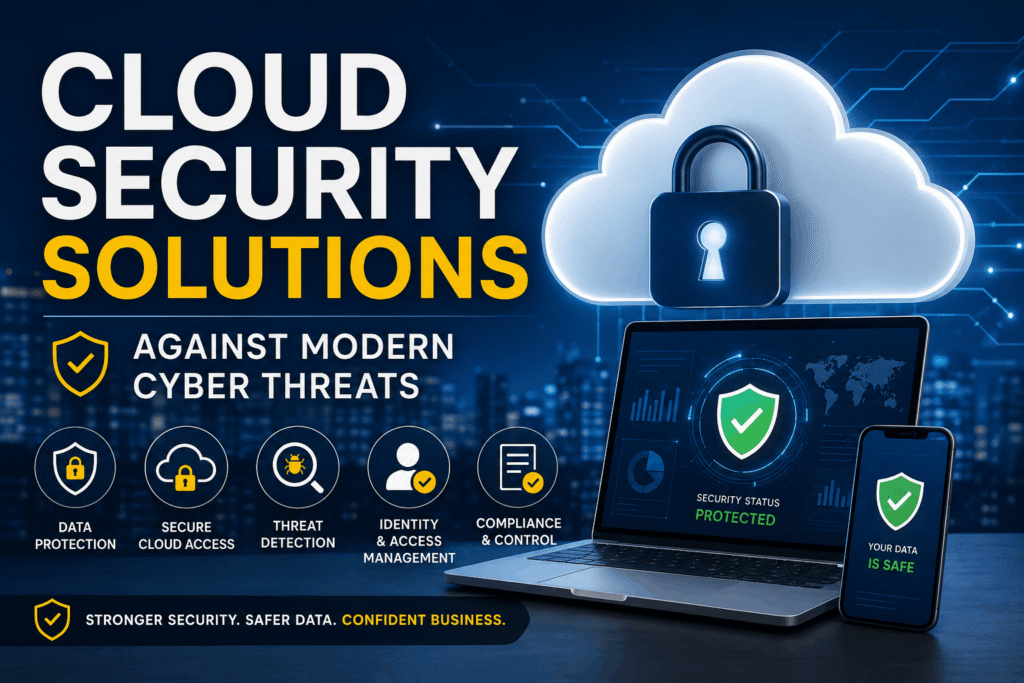
Every business depends on cloud applications in one way or another. Teams collaborate online, store customer information, manage financial records, and run essential business operations through cloud-based platforms. That convenience also makes security a top priority. Cloud Security Solutions help organizations protect sensitive information, reduce cyber risks, and maintain business continuity as threats become more sophisticated. Instead of reacting after an attack, businesses can strengthen their defenses before problems disrupt daily operations.
Cybercriminals no longer focus only on large enterprises.
Small businesses.
Growing startups.
Healthcare providers.
Manufacturers.
Retailers.
Every organization connected to the cloud can become a target.
That’s why cloud security is no longer viewed as an IT expense.
It’s a business requirement.
Why Cloud Security Has Become a Business Priority
Cloud adoption continues to grow because it offers flexibility, scalability, and lower infrastructure costs.
Employees can work remotely.
Teams collaborate across locations.
Applications update automatically.
These advantages also expand the number of places attackers may attempt to exploit.
A single compromised account can expose customer records, financial information, intellectual property, or confidential business documents.
Strong Cloud Security reduces these risks by protecting both the systems and the people using them.
Security isn’t just about preventing attacks.
It’s about keeping operations running when threats appear.
Cyber Threats Continue to Evolve
Cyberattacks rarely look the same for long.
As businesses improve their defenses, attackers change their methods.
Instead of relying on one technique, criminals combine several approaches to increase their chances of success.
Common threats include:
- Phishing emails targeting employee credentials.
- Ransomware encrypting business data.
- Stolen login credentials.
- Misconfigured cloud storage.
- Insider threats.
- Malware delivered through compromised applications.
- Third-party supply chain attacks.
Many successful attacks don’t happen because security tools fail.
They happen because simple mistakes create opportunities.
An exposed storage bucket.
A weak password.
Unused administrator accounts.
These small gaps often become the starting point for much larger incidents.
Cloud Security Solutions Protect More Than Data
When people think about security, they often focus on protecting files.
The impact reaches much further.
Modern Cloud Security Solutions safeguard applications, customer accounts, employee identities, cloud infrastructure, and business operations.
For example, if attackers gain unauthorized access to an employee account, the consequences extend beyond stolen information.
Business communication may stop.
Financial systems may become inaccessible.
Customer trust can decline quickly.
Security controls help reduce these risks before they affect day-to-day operations.
Identity Has Become the New Security Perimeter
Traditional office networks once created a clear boundary around company systems.
That boundary has largely disappeared.
Employees now work from home.
Travel frequently.
Use mobile devices.
Access cloud applications from different locations.
Because of this shift, identity verification has become one of the most important parts of Cloud Cyber Security.
Modern security platforms verify users continuously instead of trusting every successful login.
Multi-factor authentication.
Conditional access policies.
Role-based permissions.
Behavior monitoring.
Together, these controls reduce unauthorized access even when passwords become compromised.
Visibility Makes Security Stronger
Businesses can’t protect systems they can’t see.
Many organizations use dozens of cloud applications across multiple departments.
Marketing stores customer information.
Finance manages payment systems.
Human resources handles employee records.
Operations rely on collaboration platforms.
Without complete visibility, security teams struggle to understand where sensitive information exists or who can access it.
Strong Business Cloud Security begins with knowing:
- Which cloud services employees use.
- Where business data is stored.
- Who has access to critical systems.
- Which accounts have administrative privileges.
- Which applications exchange sensitive information.
This visibility helps security teams identify unnecessary risks before attackers discover them.
Cloud Misconfigurations Create Preventable Risks
Not every security incident involves sophisticated hacking.
Configuration mistakes remain one of the leading causes of cloud-related breaches.
Examples include:
- Publicly accessible storage.
- Excessive user permissions.
- Disabled security logging.
- Default security settings left unchanged.
- Unprotected application interfaces.
These issues often appear during rapid cloud deployments when businesses focus more on speed than security.
Regular reviews help identify configuration problems before they become serious vulnerabilities.
Protecting Data Means Protecting the Business
Business information represents one of an organization’s most valuable assets.
Customer databases.
Financial records.
Contracts.
Employee files.
Research documents.
Product designs.
Losing access to this information can interrupt operations for days or even weeks.
That’s why Cloud Data Protection extends beyond encryption alone.
Effective protection includes secure backups, access controls, continuous monitoring, and recovery planning.
Even if attackers gain access, businesses with strong protection strategies can recover more quickly while minimizing operational disruption.
Employees Play a Bigger Role Than Many Organizations Realize
Technology alone doesn’t stop cyberattacks.
Employees make security decisions every day.
They open emails.
Share files.
Approve requests.
Install applications.
Access company systems from different devices.
One careless click can create an opportunity for attackers.
Regular awareness training helps employees recognize suspicious activity before it causes damage.
Teaching staff how to identify phishing attempts, verify unusual requests, and report potential incidents strengthens every layer of Cloud Security.
The strongest security strategy combines technology with informed people.
Security Should Support Growth, Not Slow It Down
Some organizations worry that stronger security creates unnecessary obstacles.
In reality, well-designed Cloud Security Services help businesses grow with confidence.
Employees access resources securely from anywhere.
Customers trust how their information is handled.
Partners collaborate more safely.
Compliance requirements become easier to manage.
Instead of limiting productivity, modern cloud security creates an environment where innovation can continue without exposing the business to unnecessary risk.
Choosing the Right Cloud Security Strategy
Every business has different security requirements.
A company with remote employees faces different challenges than an organization operating from a single office.
An online retailer protects payment information.
A healthcare provider safeguards patient records.
A manufacturing company secures operational systems and intellectual property.
Because of these differences, Cloud Security Solutions should support business objectives instead of following a one-size-fits-all approach.
Before investing in new security technologies, organizations should understand:
- Which cloud platforms they use.
- What information is most valuable.
- Who requires access.
- Which compliance requirements apply.
- Where the highest security risks exist.
Answering these questions helps businesses invest in protection where it matters most.
Cloud Threat Protection Works Around the Clock
Cyberattacks don’t follow business hours.
They can begin during weekends, holidays, or in the middle of the night.
Waiting until employees notice unusual activity often gives attackers valuable time.
Modern Cloud Threat Protection continuously monitors cloud environments for suspicious behavior.
Examples include:
- Unexpected login attempts.
- Unusual data downloads.
- Privilege escalation.
- Access from unfamiliar locations.
- Malware activity.
- Unauthorized application connections.
Instead of relying solely on manual monitoring, security systems alert IT teams when activity falls outside normal behavior patterns.
Faster detection often limits the damage before attackers move deeper into business systems.
Compliance Becomes Easier With Better Security Practices
Many industries must meet strict security and privacy requirements.
Financial services.
Healthcare.
Education.
Government contractors.
Technology providers.
Meeting these standards requires more than installing security software.
Organizations need documented processes, controlled access, regular audits, and reliable reporting.
Strong Cloud Security Services simplify these responsibilities by centralizing security controls and providing detailed activity logs.
That makes demonstrating compliance much easier during internal reviews or external audits.
Good security practices naturally support regulatory requirements.
Zero Trust Is Changing Cloud Security
Traditional security assumed users inside the network could generally be trusted.
Modern cloud environments work differently.
Employees connect from multiple locations and devices.
Business applications run across several cloud platforms.
Partners and contractors frequently require temporary access.
This is why many organizations are adopting a Zero Trust approach.
Instead of automatically trusting users after login, systems continuously verify identities and evaluate risk.
Combined with Cloud Cyber Security, Zero Trust helps reduce unauthorized access even if credentials become compromised.
Trust is earned continuously rather than granted permanently.
Strong Security Starts With Everyday Habits
Advanced security platforms provide valuable protection.
Daily habits remain just as important.
Many successful cyberattacks begin with avoidable mistakes rather than sophisticated hacking techniques.
Practical Cloud Security Best Practices include:
- Enabling multi-factor authentication.
- Reviewing user permissions regularly.
- Encrypting sensitive business information.
- Updating cloud applications promptly.
- Backing up critical business data.
- Monitoring unusual account activity.
- Removing unused accounts.
- Training employees to recognize phishing attempts.
Individually, these actions appear simple.
Together, they significantly reduce overall business risk.
Security Investments Should Produce Measurable Results
Cybersecurity budgets continue growing.
Business leaders naturally want to understand whether those investments improve protection.
Instead of measuring success only by blocked attacks, organizations should evaluate broader business outcomes.
Useful performance indicators include:
- Faster threat detection.
- Reduced security incidents.
- Improved system availability.
- Fewer unauthorized access attempts.
- Stronger compliance performance.
- Faster recovery after security events.
- Lower business disruption.
- Greater employee awareness.
These measurements provide a clearer understanding of how Business Cloud Security supports operational stability.
Security isn’t simply preventing attacks.
It’s helping the business continue operating confidently.
Cloud Security Supports Business Growth
Security is often viewed as something that slows projects.
In reality, organizations with strong Cloud Security usually adopt new technologies with greater confidence.
They migrate applications more easily.
Expand into new markets.
Support hybrid work.
Share information securely with partners.
Launch new digital services.
Customers also feel more confident doing business with organizations that clearly protect their information.
That trust becomes a competitive advantage, particularly in industries where data privacy influences purchasing decisions.
Preparing for Tomorrow’s Threats
Cybersecurity changes constantly.
Attack methods evolve.
Cloud services expand.
Business operations become more connected.
The strongest organizations don’t rely on one security review each year.
They continuously evaluate risks, improve security controls, and adapt their defenses as technology changes.
Effective Cloud Security Solutions grow alongside the business.
They combine proactive monitoring, reliable Cloud Data Protection, intelligent Cloud Threat Protection, and practical Cloud Security Best Practices to reduce risk without slowing innovation.
Businesses that treat security as an ongoing process rather than a one-time project are far better prepared to respond when new cyber threats emerge.