

Open LinkedIn for five minutes, and you’ll probably see someone recommending a new AI platform or automation app. The list keeps growing, but adding more software doesn’t automatically produce better campaigns. The companies getting consistent results usually rely on a carefully chosen stack of b2b marketing tools that fits the way their teams actually work. Instead of chasing every new release, they focus on software that saves time, improves collaboration, and helps turn prospects into customers.
Every marketing team works differently. A startup with three marketers doesn’t need the same setup as a global software company managing thousands of leads every month. That’s why choosing the right tools for b2b marketing starts with understanding daily workflows rather than looking at feature lists.
Why Choosing the Right B2B Marketing Tools Matters
Marketing today involves much more than publishing blog posts or sending email campaigns.
One person might be writing content.
Another schedules webinars.
Someone else tracks website traffic while the sales team follows up with qualified leads.
Without connected systems, valuable information gets scattered across multiple platforms.
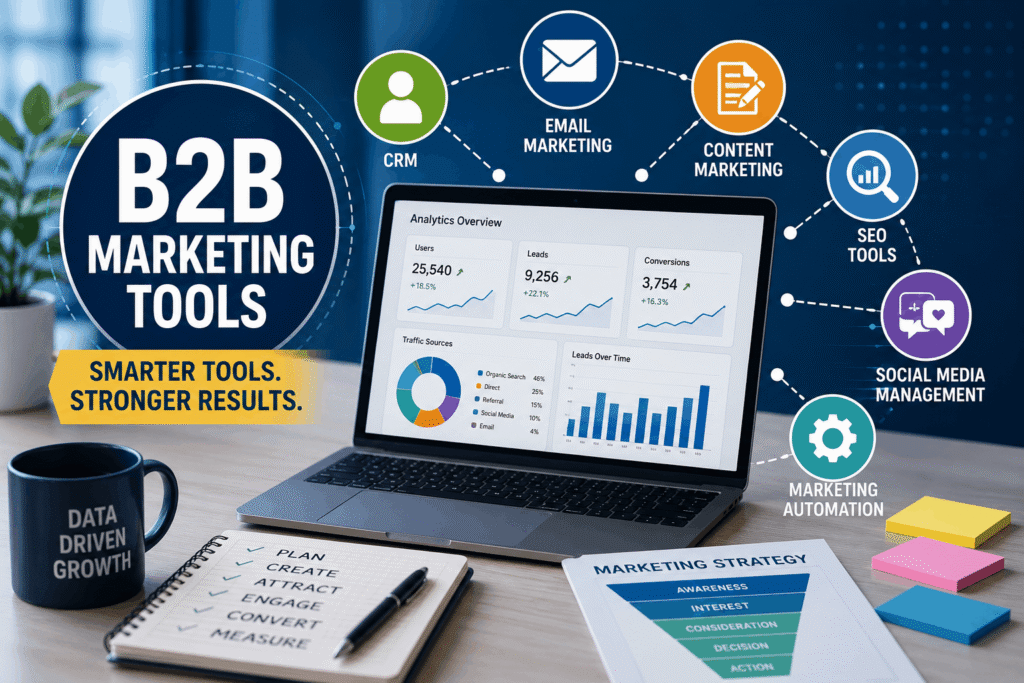
That’s where reliable b2b marketing tools make a real difference.
Instead of switching between dozens of browser tabs, marketers can organize campaigns, monitor performance, and share customer insights from connected platforms.
The goal isn’t to own the most software.
The goal is making everyday work easier.
The Best B2B Marketing Tools Solve Everyday Problems
A common mistake is selecting software because it has hundreds of features.
Many teams end up paying for capabilities they never touch.
The best b2b marketing tools usually solve simple problems extremely well.
For example:
- Scheduling social media posts.
- Managing customer relationships.
- Tracking campaign performance.
- Organizing marketing assets.
- Creating landing pages.
- Monitoring lead generation.
- Collaborating with sales teams.
If a platform removes repetitive work without creating new complications, it’s already doing its job.
CRM Platforms Sit at the Center of Modern Marketing
Customer relationship management software often becomes the foundation of an entire marketing operation.
Without a CRM, marketers struggle to answer basic questions.
Which leads downloaded an eBook?
Who requested a product demo?
Which prospects became paying customers?
A CRM connects those interactions into one timeline.
Marketing gains better reporting.
Sales receives qualified leads faster.
Customer success teams understand previous conversations before reaching out.
Popular platforms often include automation, reporting, lead scoring, and email integrations, making them some of the most valuable tools for b2b marketing available today.
Content Marketing Still Drives Long-Term Growth
Many organizations invest heavily in paid advertising.
That can generate traffic quickly.
Content continues working long after it’s published.
A detailed buying guide written today might still attract visitors next year.
That’s why content remains a priority for experienced marketers searching for the best tools for content b2b.
Several categories help content teams work more efficiently:
- Writing and editing platforms.
- SEO research software.
- Content planning calendars.
- Keyword tracking tools.
- Grammar and proofreading applications.
- Visual design software.
- Collaboration platforms.
Using the right combination keeps production organized without slowing down the creative process.
The Best Tools for Content for B2B Support Every Stage
Publishing an article is only one part of the process.
A typical content workflow also includes:
Research.
Keyword planning.
Writing.
Editing.
SEO optimization.
Graphic creation.
Publishing.
Promotion.
Performance tracking.
The best tools for content for b2b support each of these stages without forcing marketers to jump between disconnected systems.
For example, a writer may research keywords in one platform, prepare outlines in another, collaborate through cloud documents, and finally publish through a content management system connected to analytics software.
The smoother that workflow becomes, the easier it is to maintain a consistent publishing schedule.
Email Marketing Continues to Deliver Results
Despite constant attention on social platforms, email remains one of the most dependable marketing channels.
Subscribers choose to receive updates.
That makes every message more valuable than interruptive advertising.
Today’s email platforms do much more than send newsletters.
Many include:
- Audience segmentation.
- Automated workflows.
- Personalized messaging.
- Performance reporting.
- Lead nurturing campaigns.
- A/B testing.
These features allow marketers to send relevant messages instead of broadcasting identical emails to every contact.
Analytics Turn Marketing Data Into Better Decisions
Running campaigns without analytics is like driving without looking at the dashboard.
Traffic numbers alone don’t tell the full story.
Marketers also need answers like:
- Which pages generate qualified leads?
- Which campaigns create sales opportunities?
- Where do visitors leave the website?
- Which content earns the most engagement?
- How long does it take a lead to become a customer?
Reliable reporting platforms answer those questions with measurable data.
Instead of relying on assumptions, marketing teams can refine campaigns using real customer behavior.
Many experienced professionals consider analytics among the most important b2b marketing resources because every future decision depends on accurate information.
Good Marketing Tools Don’t Replace Good Strategy
Software helps teams work faster.
It doesn’t decide what customers actually need.
A beautifully designed campaign still fails if the messaging misses the audience.
That’s why experienced marketers build their strategy first and choose software afterward.
When the business goals are clear, selecting the right b2b marketing tools becomes much simpler.
AI Is Changing Marketing, Not Replacing It
Artificial intelligence has become part of many marketing workflows, but it isn’t running successful campaigns on its own.
Teams still decide the audience.
They write the messaging.
They approve the final content.
AI simply helps complete repetitive tasks faster.
Many of today’s best b2b marketing tools include AI-powered features such as:
- Email subject line suggestions.
- Content outlines.
- Lead scoring.
- Campaign recommendations.
- Customer segmentation.
- Predictive reporting.
These features reduce manual work, giving marketers more time to focus on planning and customer relationships.
Collaboration Keeps Marketing Projects Moving
A campaign rarely involves one person.
Designers create graphics.
Writers prepare articles.
SEO specialists optimize pages.
Marketing managers review everything before publication.
Without collaboration software, feedback quickly disappears inside long email threads.
Modern project management platforms organize tasks, deadlines, approvals, and file sharing in one place.
Many organizations now consider collaboration software one of their most valuable b2b marketing resources because every department works from the same information.
Instead of asking,
“Which version is the latest?”
Everyone already knows.
SEO Software Helps Content Reach the Right Audience
Publishing useful content is only half the job.
People still need to find it.
That’s where SEO software becomes essential.
Marketers use these platforms to:
- Discover search opportunities.
- Track keyword rankings.
- Review competitors.
- Find technical website issues.
- Improve internal linking.
- Monitor backlinks.
- Measure organic traffic.
Companies looking for the best tools for content b2b often begin with SEO platforms because every article depends on understanding what potential customers are searching for.
Without research, content becomes guesswork.
Social Media Management Requires More Than Scheduling
Posting updates manually every day isn’t practical for busy marketing teams.
Social media management platforms simplify planning while providing useful reporting.
Many support:
- Multi-platform publishing.
- Content calendars.
- Audience engagement.
- Performance analytics.
- Team approvals.
- Brand monitoring.
These capabilities allow marketers to spend less time publishing and more time creating meaningful conversations.
Combined with other tools for b2b marketing, social platforms become another reliable source of qualified leads.
Account-Based Marketing Depends on Better Data
Account-Based Marketing (ABM) focuses on reaching specific companies instead of broad audiences.
That changes how marketers use technology.
Rather than measuring thousands of anonymous website visitors, teams monitor engagement from selected target accounts.
Many best b2b marketing tools now include features supporting ABM, including:
- Account tracking.
- Buying committee insights.
- Personalized campaigns.
- Sales and marketing alignment.
- Intent data.
- Engagement reporting.
When sales and marketing share the same customer information, conversations become far more relevant.
Marketing Automation Saves Time on Repetitive Tasks
Few marketers enjoy repeating the same manual work every day.
Automation handles many of those responsibilities without sacrificing consistency.
Common examples include:
- Welcome email sequences.
- Lead nurturing campaigns.
- CRM updates.
- Webinar reminders.
- Form notifications.
- Lead assignments.
- Customer follow-ups.
Automation doesn’t replace human communication.
It simply ensures routine activities happen on time.
Organizations investing in tools for b2b marketing often begin automation gradually before expanding into more advanced workflows.
Build Your Marketing Stack Around Business Goals
Adding another platform isn’t always the answer.
Many companies already own software they barely use.
Before buying anything new, ask a few practical questions:
- Which problem are we trying to solve?
- Can an existing platform handle it?
- Will the new software save measurable time?
- Does it integrate with current systems?
- Will employees actually use it?
Answering these questions prevents unnecessary spending while keeping the technology stack manageable.
The best b2b marketing tools fit naturally into existing workflows instead of forcing teams to redesign everything.
Common Mistakes When Choosing Marketing Software
Some purchasing decisions create more work than they eliminate.
These mistakes appear frequently across organizations.
Buying Features Instead of Solutions
Large feature lists look impressive during product demonstrations.
Many capabilities remain unused after implementation.
Ignoring Team Feedback
Employees using the software every day often identify practical issues that decision-makers miss.
Overlooking Integration
Disconnected platforms create duplicate work and inconsistent reporting.
Skipping Training
Even excellent software delivers poor results if teams don’t understand how to use it.
Measuring the Wrong Metrics
High website traffic means little if qualified leads never reach the sales team.
The Strongest Marketing Teams Keep Learning
Marketing changes constantly.
Search behavior shifts.
Customer expectations evolve.
New software appears almost every month.
Successful teams don’t install one platform and stop improving.
They regularly evaluate their workflows, test new ideas, and learn from campaign performance.
Along the way, they rely on trusted b2b marketing resources to stay informed about changing trends, customer behavior, and practical marketing techniques.
That mindset matters more than owning every new platform.
The companies that consistently generate results aren’t using the most software.
They’re using the right software for the work they do every day.









One Response