Given the fast-changing nature of digital marketing, marketing judgment in the AI era is undoubtedly one of the most important skills for success. Although AI tools can produce content in seconds, process vast amounts of information, and optimize campaigns with impressive accuracy, they can’t beat the subtle, human touch of understanding what will work for audiences through strategic, ethical, and creative decision-making.
The ones who are getting ahead are marketers who can blend AI marketing with human judgement. They know what they do and know how to do it, are self-directed and accountable, and operate efficiently with equipment. In this post we’ll cover the relevance of marketing judgement, its function alongside AI marketing strategy and strategies to hone your marketing sensitivities for 2026 and beyond.
What Is Marketing Judgment?
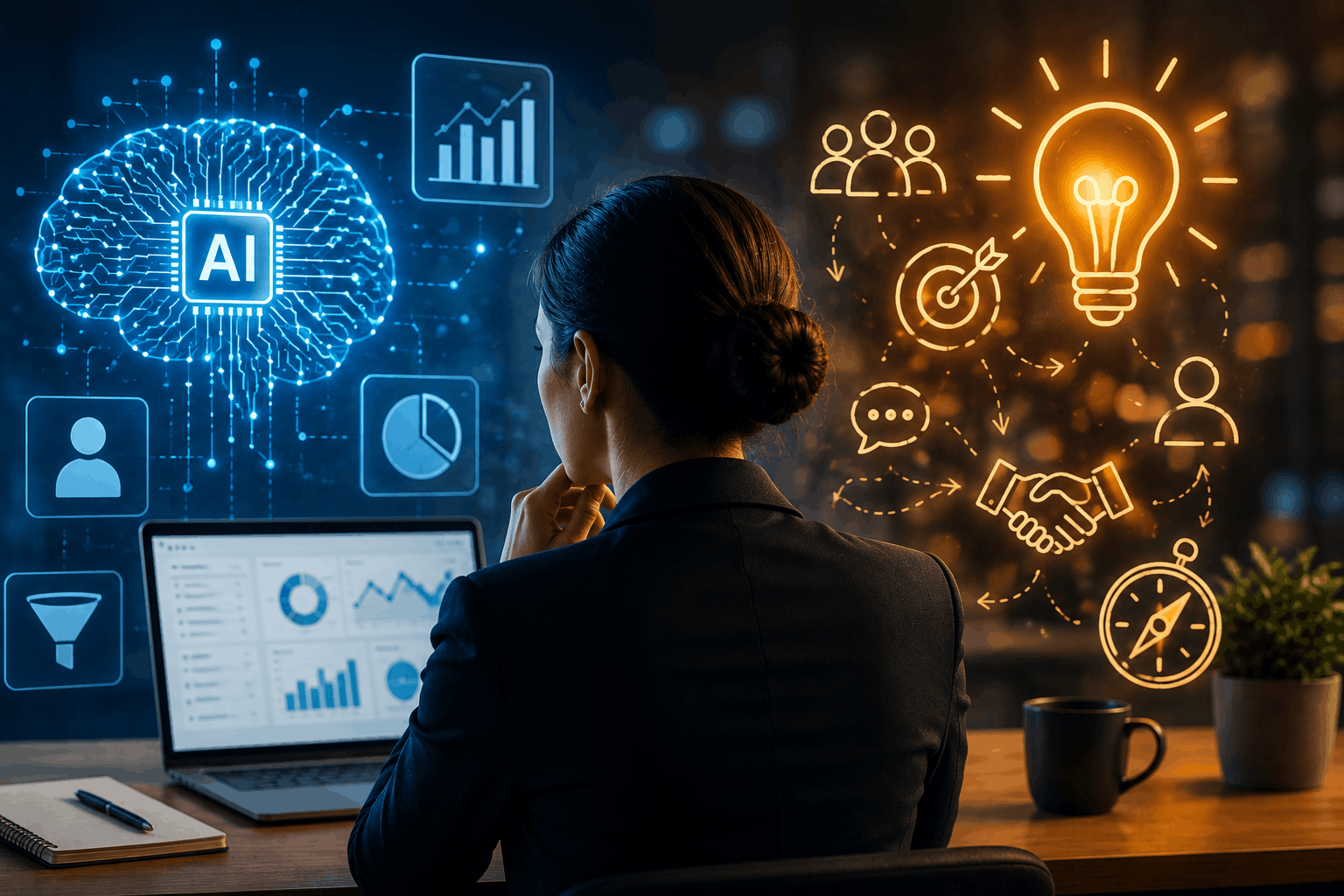
Marketing judgement is the ability to perceive the whole picture, to interpret information in context, to evaluate risk and opportunity and make judgements that represent a brand’s values, its audience’s requirements and the purposes of the organisation. What AI doesn’t have presently is the ability to learn from experiences, to rely on intuition, to be culturally sensitive, and to think morally.
AI on the other hand is very good at pattern recognition, automation and scalability. It may generate thousands of ad variants or predict client actions based on past data. But there is no context, no feeling, no comprehension of the brand setting. This is where human judgement in marketing enters in.
Why Marketing Judgment Matters More in the AI Era
As AI marketing trends accelerate, the volume of content, insights, and options explodes. This abundance creates new challenges:
- Over-Reliance Risks: Teams that lean too heavily on AI often produce generic, inauthentic output that fails to stand out or build trust.
- Ethical Considerations: AI can inadvertently amplify biases or generate misleading claims. Human oversight ensures responsible marketing.
- Strategic Depth: AI handles tactics well, but big-picture decisions like campaign timing, messaging tone, and market positioning require strategic judgment.
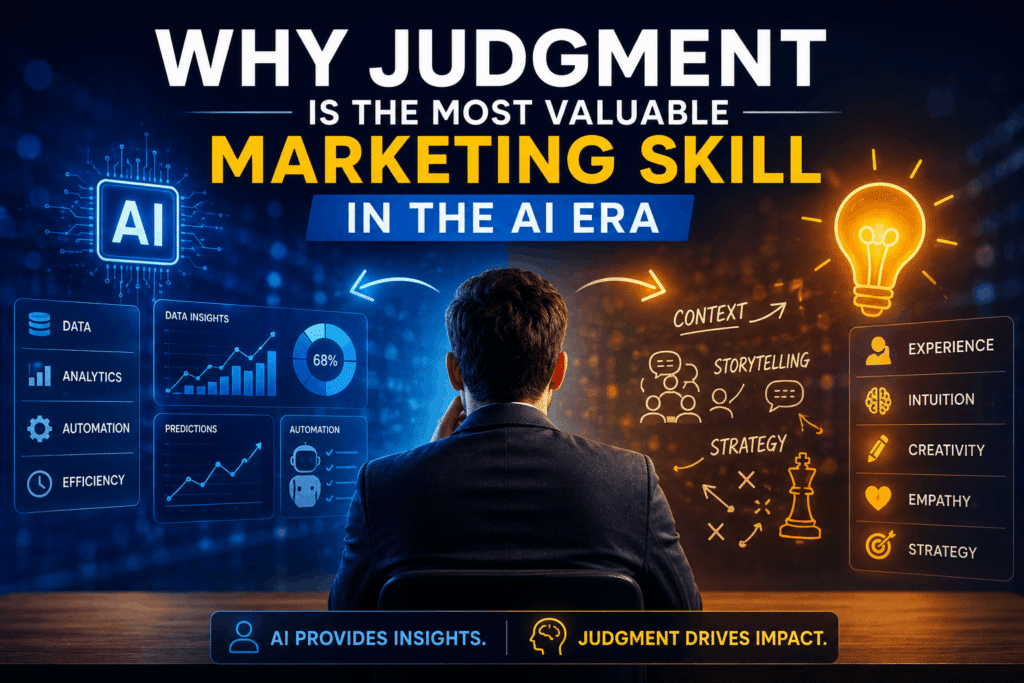
Research and expert opinions in 2026 consistently show that AI and human decision-making work best as a partnership. AI augments productivity, but human judgment drives innovation, relevance, and sustainable growth.
The Role of Human Judgment Across Marketing Functions
AI-powered marketing tools are transforming every area, yet judgment remains central:
- Content and Creativity: AI drafts posts and videos quickly, but human-centered marketing ensures emotional resonance, cultural sensitivity, and brand voice consistency. Humans decide what feels authentic versus what seems robotic.
- Audience Understanding: Data tells you what people do; judgment helps you understand why and how to respond meaningfully.
- Campaign Strategy: Choosing channels, budget allocation, and timing relies on experience that goes beyond algorithmic recommendations.
- Crisis Management: When issues arise, rapid, empathetic responses depend on leadership judgment rather than predefined AI protocols.
- Measurement and Optimization: Interpreting metrics in a business context and separating signal from noise require marketing leadership skills.
Developing Strong Marketing Judgment in the AI Era
The good news is that AI marketing skills can be intentionally cultivated. Here are proven approaches:
- Build Deep Experience: Prioritize hands-on work across campaigns, industries, and customer interactions. Judgment strengthens through repeated real-world application.
- Practice Critical Evaluation: Always question AI outputs. Ask: Does this align with our brand? Will it resonate emotionally? What are the potential risks?
- Foster Curiosity and Learning: Stay updated on AI marketing trends while deepening knowledge in psychology, sociology, and business strategy.
- Encourage Experimentation with Guardrails: Test AI tools aggressively but maintain human review checkpoints for final decisions.
- Develop Cross-Functional Collaboration: Work closely with sales, product, and customer success teams to gain broader perspectives that inform better judgment.
- Focus on Ethics and Values: Define clear principles that guide AI usage, ensuring technology serves human-centered goals.
Leaders who invest in these areas create teams that leverage AI marketing strategy without losing the human edge.
Real-World Examples of Judgment in Action
Many hit brands show this balance correctly. Companies that use AI for personalization still rely on marketers to approve nuanced messaging that avoids alienating segments. In one wonderful case, a store used AI-generated guidelines while still relying on human judgment for seasonal and cultural changes, resulting in better engagement and consideration.
Agencies that position themselves as “AI-assisted, human-led” frequently win top-rate customers who feel authenticity over pure automation.
Challenges and How to Overcome Them
Transitioning to this hybrid model isn’t without hurdles:
- Skill Gaps: Junior team members may struggle to evaluate AI work critically, solution: Structured mentoring and judgment-building exercises.
- Time Pressure: Speed from AI can tempt shortcuts. Counter this with clear processes that mandate human oversight for high-impact decisions.
- Measurement Difficulty: Judgment is qualitative. Track outcomes like brand sentiment, long-term customer loyalty, and creative effectiveness alongside quantitative metrics.
Organizations that treat marketing judgment as a core competency see better ROI on AI investments and stronger competitive positioning.
Practical Tips for Marketers and Leaders
- Start small: Integrate AI into one workflow (e.g., content ideation) and focus on refining judgment.
- Use frameworks: Create decision matrices that combine AI insights with human criteria.
- Review regularly: Hold “judgment audits” on past campaigns to extract lessons.
- Invest in training: Workshops on prompt engineering paired with strategic thinking sessions.
- Lead by example: Marketing leaders should visibly demonstrate balanced AI and judgment.
Looking Ahead: The Future of Marketing Leadership
As AI capabilities continue to grow, the need for human creativity and insight in marketing will only grow. The best will be those that can perform the role of orchestra, leading the technology, and infusing the work with creativity, ethics and a vision of the future.
In the era of AI, marketing judgement is not about rejecting technology. It’s about using it wisely to establish better connections and keep the company booming. Those who cultivate this trait will become indispensable strategic partners, not faceless expedient technologists.
Pairing an AI marketing strategy with the shoring up of human traits that can’t be replicated makes a winning combo for marketing in a more automated market that yet wants the human touch.