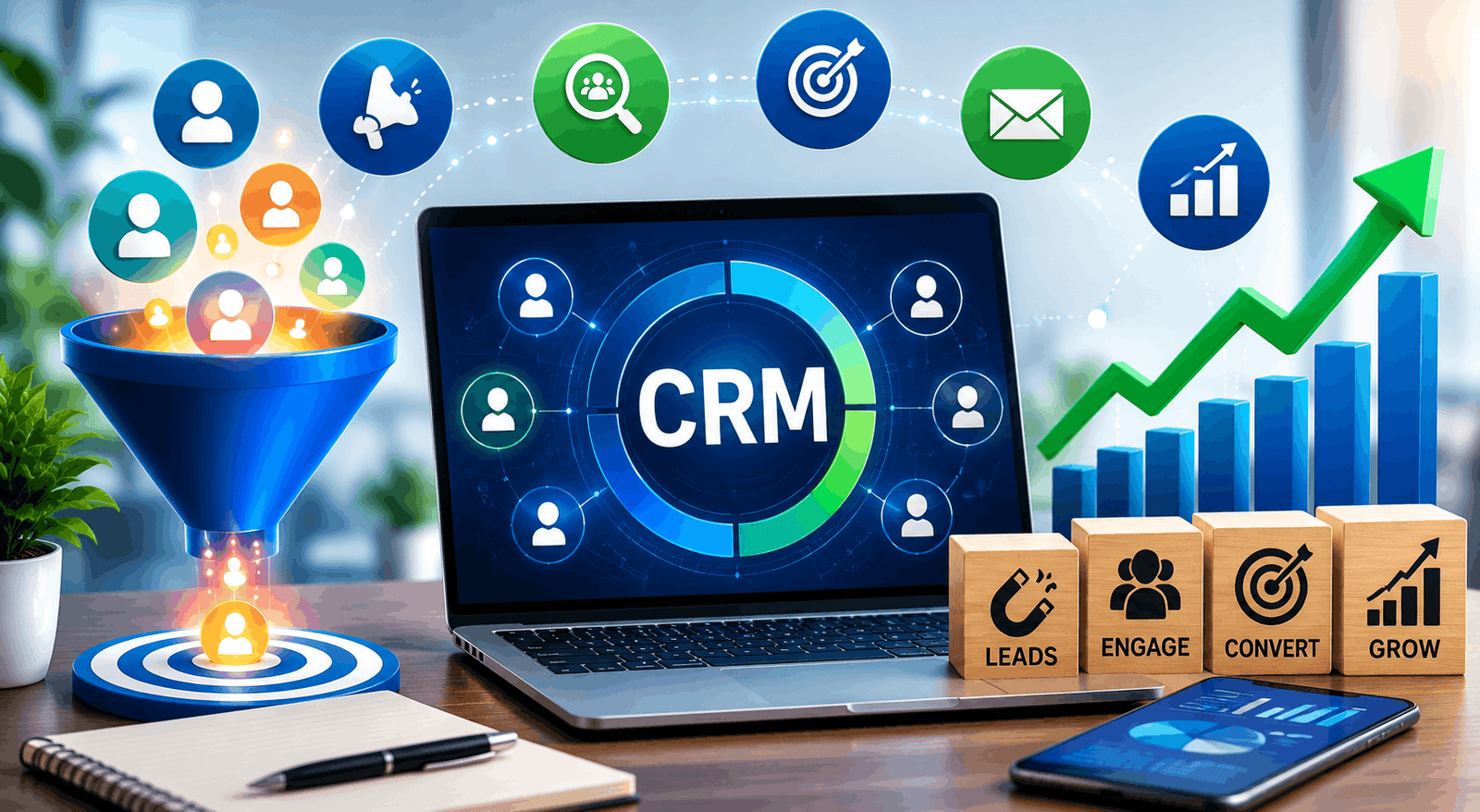
In today’s competitive B2B landscape, generating leads is the most effective way to succeed. The real venture lies in turning a hobby into certified opportunities and sustained revenue. This is where a properly carried out CRM turns into your most powerful ally. By centralizing patron records, automating workflows, and enabling smarter, more focused CRM Lead and Demand Generation techniques, CRM can dramatically improve overall performance, personalization, and results.
Whether you’re a growing startup or a long-standing business, integrating your CRM deeply with marketing and sales efforts creates a continuous flywheel that attracts, nurtures, and converts opportunities more efficiently than ever before.
Understanding Lead Generation vs. Demand Generation
Before diving into tactics, it’s important to clarify the difference:
- Lead Generation focuses on capturing contact information and identifying interested prospects (forms, webinars, ads, etc.).
- Demand Generation builds broader awareness and interest in your category or solution over time through content, thought leadership, and brand experiences.
A modern CRM bridges both by turning raw data into actionable insights across the entire buyer journey.
How CRM Powers Modern Lead and Demand Generation
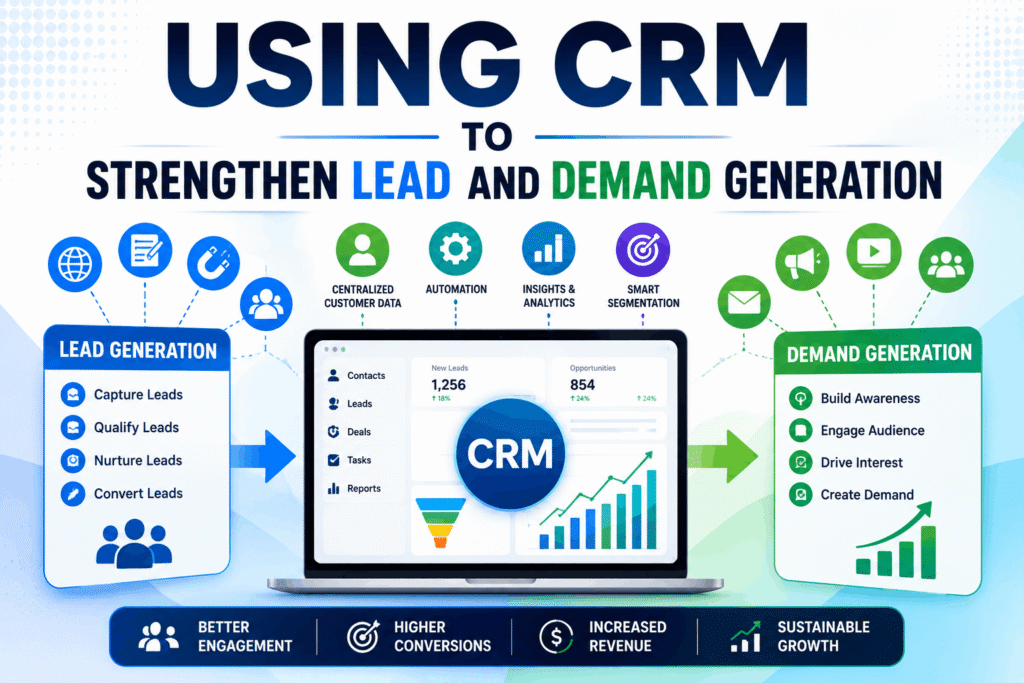
A robust CRM does far more than store contacts. It acts as the central nervous System for your growth engine:
- Unified Customer View: All interactions (website visits, email opens, social engagement, support tickets) feed into one profile.
- Intelligent Lead Scoring: Automatically rank prospects based on behavior, firmographics, and intent signals.
- Automated Nurturing Trigger personalized sequences that move leads through the funnel without manual effort.
- Pipeline Visibility Track every stage from awareness to closed-won with real-time dashboards.
- Attribution and ROI Measurement: Understand which campaigns and channels actually drive revenue.
Key Strategies for Using CRM Effectively
1. Align Marketing and Sales in One System
Break down silos by using a CRM that supports each group. Platforms like HubSpot or Salesforce enable seamless handoffs for MQLs, even as sales can see the overall engagement history.
2. Implement Advanced Lead Scoring
Combine explicit (activity identifier, company length) and implicit (content downloads, website behavior) information. AI-powered scoring enables prioritizing excessive-intent leads for quicker follow-up.
3. Build Sophisticated Nurturing Workflows
Use behavioral triggers to send the right content at the proper time. For example, a person who downloads a guide on “call for era strategies” can mechanically input a chain highlighting their answer’s abilities.
4. Leverage Intent Data and Enrichment
Integrate 0.33-celebration purpose indicators into your CRM. When a prospect suggests buying indicators on overview websites or competitor pages, your team is immediately alerted.
5. Personalize at Scale
Dynamic content, tailored messaging, and account-based advertising (ABM) become much more all-inclusive when combined with the CRM.
Best CRM Tools for Lead and Demand Generation in 2026
- HubSpot CRM is excellent for inbound-focused teams with strong marketing automation and free starter options.
- Salesforce is powerful for enterprise needs with deep customization and AI features (Einstein).
- Pipedrive Visual pipeline focus is ideal for sales-driven lead management.
- Zoho CRM is affordable with solid automation for growing businesses.
Real-World Benefits and Results
Companies that effectively use their CRM for these purposes often see:
- 20-30% higher conversion rates from lead to opportunity.
- Significantly shorter sales cycles.
- Better alignment between marketing and sales teams.
- More accurate forecasting and reporting.
Common Challenges and How to Overcome Them
- Data Quality: Implement regular cleaning processes and validation rules.
- Adoption: Provide training and tie usage to team KPIs.
- Integration Complexity: Start with native connectors and tools like Zapier.
- Over-Automation: Always balance automation with human touch for high-value interactions.
Taking It Further with Expert Help
For many organisations, building these systems internally takes time and resources. Partnering with specialists who understand B2B demand generation can accelerate results. IntentFlow Media offers targeted B2B demand generation services that complement strong CRM foundations, helping tech and professional services firms build structured, revenue-aligned pipelines.
Getting Started: Actionable Steps
- Audit your current CRM usage and data quality.
- Define clear lead stages and scoring criteria.
- Map key customer journeys and automation opportunities.
- Integrate essential tools (website, email, analytics, intent data).
- Test, measure, and iterate weekly.
Conclusion
Using CRM to strengthen lead and demand generation is no longer optional; it’s a competitive necessity. By treating your CRM as a strategic growth platform rather than just a contact database, you can create more predictable revenue, improve customer experiences, and scale efficiently.
The businesses winning in 2026 are those that combine great content and channels with intelligent systems that turn data into relationships and relationships into revenue.
Ready to optimize your approach? Start by evaluating how deeply your CRM is integrated with your current demand generation efforts.