
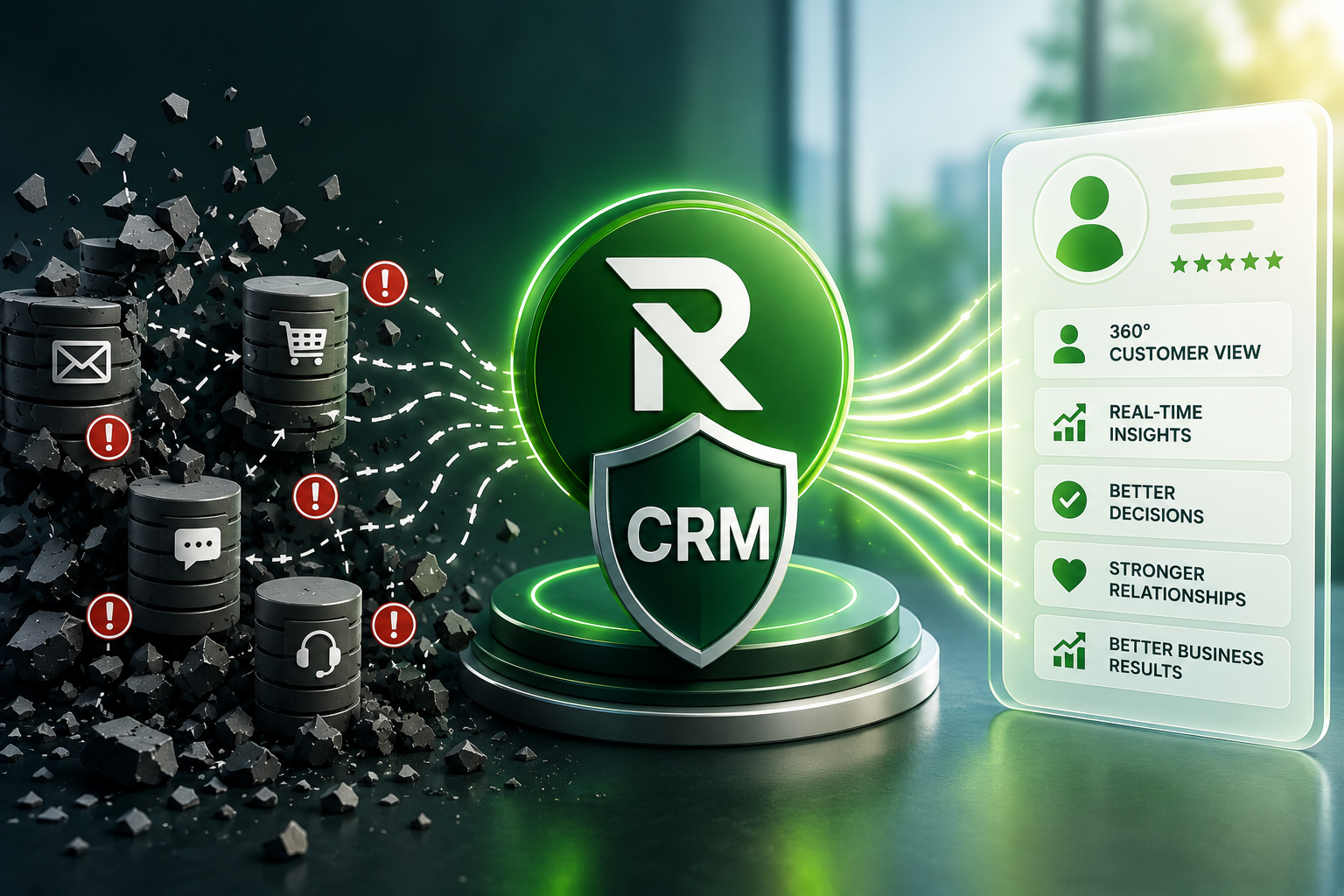
Today’s digital world is awash with customer data spread across a multitude of platforms, tools and departments. This challenge, known as CRM Data Fragmentation, is one of the largest hurdles to providing a superb customer experience. Instead of just being a part of the solution to data fragmentation, CRM should take the lead in the response, Reilly said.
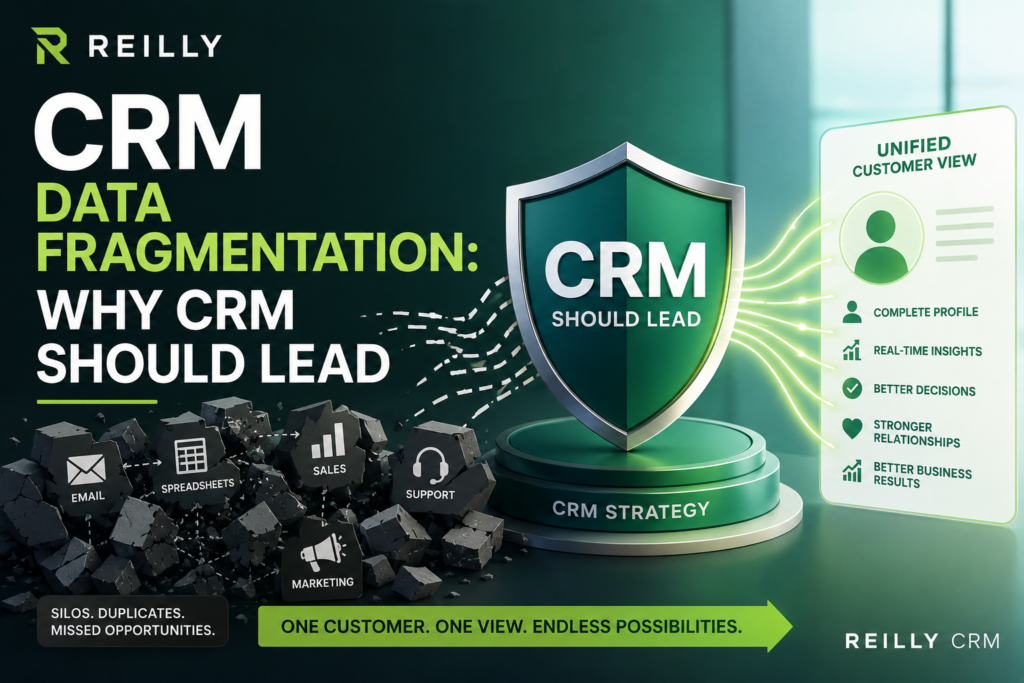
Customer data is dispersed across marketing automation platforms, support ticketing systems, sales CRMs, billing software, and various analytics tools, a phenomenon known as CRM Data Fragmentation. This leads to incomplete customer records, duplicate data, lost opportunities, and a poor customer and employee experience.
It’s a significant error to treat CRM Data Fragmentation as a secondary problem, Reilly says. Rather, businesses should make the Customer Relationship Management system the hub of all customer data. This CRM management strategy can redefine how businesses perceive, interact with, and retain customers.
The True Cost of Ignoring CRM Data Fragmentation
If data fragmentation continues, companies will pay a high price. Salespeople spend time pursuing leads that aren’t ready to buy. Marketing campaigns are aimed at the wrong audience slices. Customer Support agents have limited context when addressing issues. These inefficiencies result in a loss of revenue, increased churn rate and tarnished brand reputation over time.
Reilly makes the point that CRM Data Fragmentation isn’t just a technical issue; it’s a business issue with a direct impact on growth. Data silos create information gaps, leaving leadership without the data needed to make informed strategic decisions. Lacking a customer view means organizations are less likely to deliver the personalized experience at scale that today’s customers expect.
To overcome data fragmentation, many companies add tools and integration platforms to their portfolios. But this can exacerbate the problem and generate even more customer data silos. Reilly strongly cautions against this method and suggests a more integrated approach to data integration, in which the CRM handles it internally rather than from the periphery.
Why CRM Is Best Positioned to Solve Data Fragmentation
The CRM platform already contains the most valuable historical customer interactions, purchase history, communication records, and relationship context. This is why it is the obvious place to solve CRM Data Fragmentation. Reilly points to some compelling reasons for CRM to be in the driver’s seat:
The first advantage of CRM systems is that they are built around the customer. They know relationships, touchpoints and journeys more than any other enterprise system. Second, CRMs offer powerful data integration features, including real-time synchronization, API integrations, and built-in ETL tools. Thirdly, by placing CRM in the middle, governance, data quality policies, and compliance rules are made applicable to all customer records.
By establishing strong CRM leadership in the battle against data fragmentation, companies create a single source of truth. This unified customer view empowers every team, sales, marketing, service, and product to work with the same accurate, complete, and up-to-date information.
How to Make CRM Lead the Response to Data Fragmentation
Reilly provides a framework for organizations that are looking to address CRM Data Fragmentation. The first step is to conduct a thorough review of all customer data sources and identify the largest customer data silos. Then there is the mapping of data flows and rules of ownership of key customer attributes.
To be successful, you need to select a CRM strategy that supports bidirectional synchronisation and master data management. Instead of connecting all the systems directly to one another, all the customer data should go through the CRM system. This is a greatly simplified hub-and-spoke solution that enhances data quality.
Trusted organizations are also adopting AI-powered data-cleansing and enrichment tools within their CRM systems. These technologies automatically identify duplicates, fill in missing data, and highlight inconsistencies in real time. CRM leadership in this space brings compounding returns over time, as Reilly notes, “as data becomes more accurate over time.
The Impact on Customer Experience and Business Growth
When handled correctly, the advantages of CRM Data Fragmentation span all customer touchpoints. When the messages are based on complete behavioural and transactional data, personalized marketing becomes really meaningful. A complete history of interactions and preferences speeds up the sales team’s closing. Support resolutions occur more quickly and at a higher first-contact rate.
This is because addressing data fragmentation with a strong CRM strategy opens new revenue streams, Reilly adds. Teams begin to see a full picture of the customer, which can lead to more effective cross-selling and upselling. Customers are more likely to stay when it feels like a more seamless and proactive experience than a reactive one.
Businesses that invest in CRM leadership in data management tend to see significant improvements in customer metrics such as lifetime value, revenue per customer, and customer satisfaction scores. When you tackle the challenge of CRM Data Fragmentation, you’re unlocking the unified customer view, which in many markets is a real competitive advantage.
Best Practices for Long-Term Success
According to Reilly, solving CRM Data Fragmentation should not be considered a project but rather an ongoing process. An organization should form a cross-functional data governance team with clearly defined responsibilities for data quality. Continuous monitoring and regular reviews help prevent the creation of new customer data silos when introducing new tools.
It’s also crucial to invest in employee training. Teams must be aware of the technical requirements of data integration and the business benefits of maintaining a unified customer view. If CRM Data Fragmentation is everyone’s problem, then everyone is part of the solution.
Security and compliance should always be a top concern on this journey. Enforcement of evolving regulatory requirements must be built into CRM systems: robust access controls, consent management and audit trails must all be built into the centralized customer data system.
The Future of CRM Leadership in a Fragmented World
Reilly says that in the future, CRM Data Fragmentation will only get harder as new channels, devices and technologies are introduced into businesses. The winners will be those who make their CRM the strategic center of their customer data architecture, not a mere operational tool.
Progressive businesses are already exploring composable CRM architectures and real-time data platforms that enhance the CRM leader’s role. The innovations help maintain a comprehensive, accurate single customer view across the growing number of available data sources.
As Reilly said, “People who view CRM Data Fragmentation as a side issue in IT will be left behind. People who enable their CRM to drive responses will establish better customer relationships, run more effectively, and gain a sustainable competitive edge.
The time to act on CRM Data Fragmentation is now. By embracing a strong CRM strategy and CRM leadership, businesses can turn their greatest data challenge into their most powerful strategic asset.






One Response