If you are struggling to keep track of leads, follow up on time, or turn prospects into paying customers, you are not alone. Most businesses lose money every month simply because their lead management process is messy and disorganized. The solution many successful companies are turning to is finding the right CRM for lead management tools. These platforms help you organize leads, automate follow-ups, track every interaction, and ultimately close more deals with less effort.
In this guide, I will provide practical information on why it is important to have a lead management system in 2026, which systems work, and how you can use the right one to take your sales to the next level. From small businesses to expanding start-ups to a team of salespeople, the right CRM for lead management can change your entire sales process.
Why You Need CRM for Lead Management Tools in 2026
Competition has increased in sales. Buyers are more picky, have higher standards and shorter attention spans. If you are still using spreadsheets, sticky notes or different email communications to manage leads, you’re wasting opportunities every week. Leads go cold, follow-ups get forgotten, and vital information falls through the cracks.
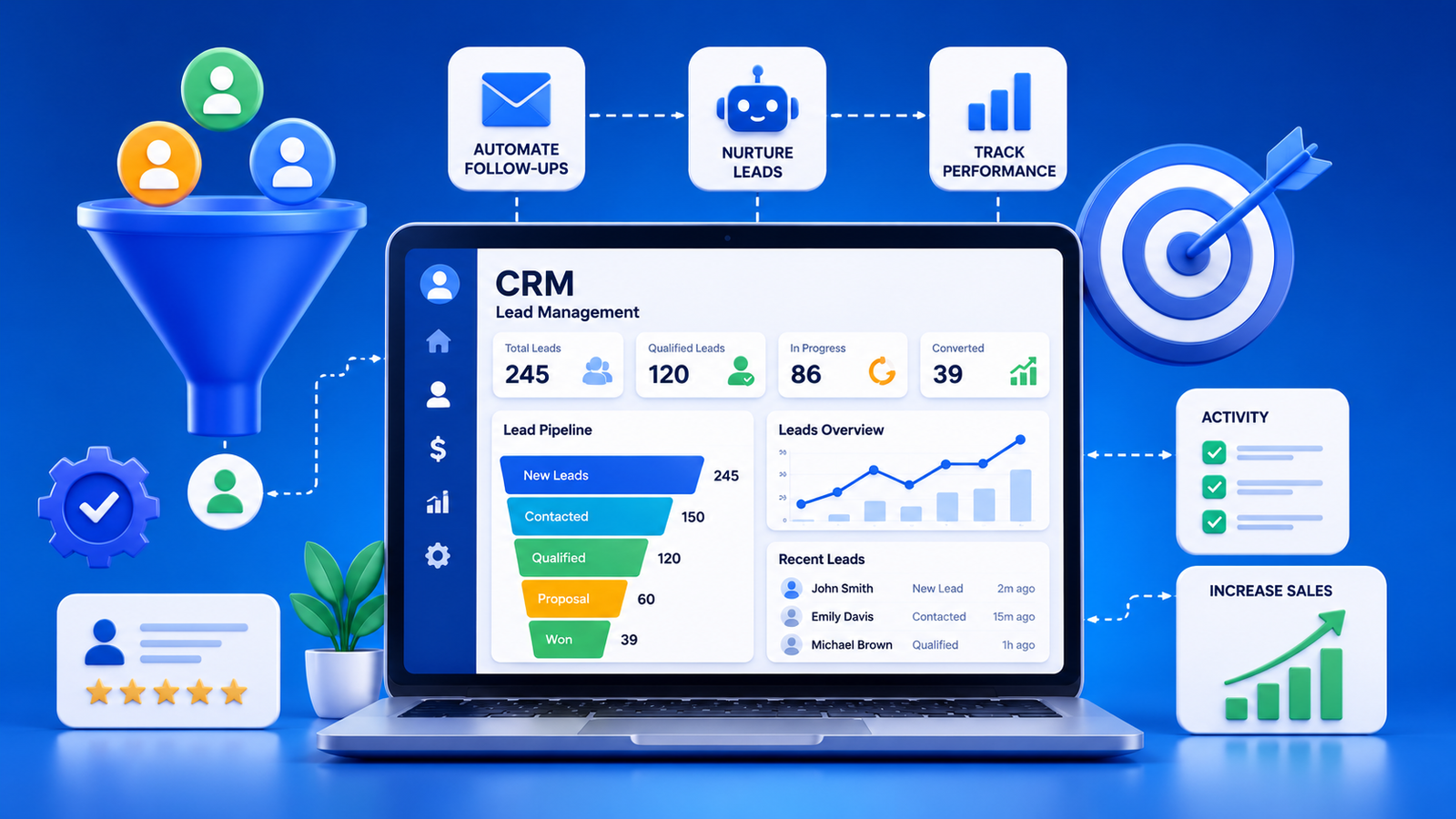
A CRM for lead management can revolutionize that. It integrates all your lead data into a single central place where you can view a complete history, status and next steps for each lead. That visibility enables your team to respond more quickly, tailor communications, and direct energy to the hottest leads.
The point I’ve heard from numerous business owners is that once they installed the appropriate lead management software solution, they noticed a 20-40 percent boost in conversion rates and saved time on manual administration. With buyers wanting to be communicated with promptly with a certain level of relevance, strong lead management software is no longer an option in 2026. It is necessary to maintain steady sales.
Best CRM for Lead Management Tools Right Now
For businesses that prioritize effective lead management, there are several great choices for 2026. Some of the best performers are here…
HubSpot CRM is still one of the most preferred CRM tools, particularly for small and medium-sized businesses. It’s free plan actually offers some good value; it has a robust lead-tracking system, email sequences, and a smart lead-scoring system. As your business expands, you can add more advanced features without changing platforms.
Another popular choice is Pipedrive, especially for sales teams who prefer visual pipelines. With it, you can easily see the current stage of every lead in your sales process, and it offers powerful automation capabilities that advance deals.
Salesforce is still the top choice for larger teams or businesses with more complex requirements. It may seem daunting at first, but it offers more than any other lead nurturing software and more customization options. Many small businesses start with basic tools and eventually move to Salesforce.
Zoho CRM offers a great free plan, along with affordable paid versions. It also features robust lead management, built-in email, invoicing and project tools, making it an effective solution for many businesspeople.
Freshworks’ Freshsales is worth noting for its excellent AI capabilities in lead scoring, and monday sales CRM is for teams looking for a more visual, customizable workspace.
It really depends on the number of people in your team, your budget and your sales process. But all these CRM platforms aim to simplify and improve lead management.
Key Features to Look for in Lead Management Software
When evaluating CRM software for sales, you should focus on features that directly solve your biggest daily problems.
A visual sales pipeline is essential because it lets you see the status of every lead at a glance. Automatic lead capture from website forms, emails, and social media saves enormous time. Lead scoring helps you identify which prospects are most likely to buy so you can prioritize them.
Automation capabilities are also critical. The system should be able to send timely follow-up emails, create tasks, and update lead status without manual work. Good reporting and analytics show you what is working and where you need to improve. Mobile access matters because your team needs to update information on the go. Finally, strong integration with your existing tools, such as email, calendars, and payment processors, makes everything flow smoothly.
The top lead-tracking CRM systems combine these features in an easy-to-use interface that your team will actually enjoy every day.
How to Choose the Right CRM Software for Sales
Choosing the best customer relationship management tools requires some thought. Start by looking honestly at your current sales process. Where are leads coming from? How many leads do you handle each month? What is your biggest frustration right now?
Consider your team size and technical comfort level. Smaller teams usually do better with simpler, more intuitive platforms like HubSpot or Pipedrive. Larger or more complex sales organizations may need the depth that Salesforce or Zoho provides.
Budget is obviously important. Many strong CRM for lead management tools offer generous free or low-cost plans that are perfect for testing. Take advantage of free trials and involve your sales team in the decision. They will be the ones using the system daily, so their feedback matters.
Pay close attention to how well the CRM integrates with your other tools. Also, think about future growth. Choose a platform that scales with you, rather than forcing you to switch systems later.
How to Implement CRM for Lead Management Successfully
Getting a new CRM set up properly makes all the difference between success and frustration. Start by cleaning your existing lead data before importing it. Old or inaccurate information will only create problems later.
Outline your dream sales funnel and define its stages. Hire the right people, and make sure they are properly trained and understand the system’s benefits and why they are important to them and to the company’s growth. Use the basics before moving on to the advanced features.
Schedule simple automations, such as follow-up emails and task reminders. Small automations deliver the highest ROI. Check and review your pipeline with your team frequently, and make changes to your stages/processes as you learn what works best.
When done wisely and regularly, businesses notice significant improvements in their lead management software within 30 to 60 days of implementation.
Pro Tips to Maximize Results with Your CRM for Lead Management Tools
Your investment in your CRM is best used when it is treated as an ongoing system that must be maintained regularly. Maintain clean and up-to-date data. Effectively segment leads using the tags and custom fields, and send more relevant messages.
Implement better lead nurturing with your CRM, coupled with great content and useful resources. Monitor key metrics such as conversion rates, sales cycles, and the performance of your lead sources to continue improving.
Make sure your team embraces the system, demonstrating its effectiveness in closing more deals and simplifying their jobs. Consider implementing AI capabilities; many recent CRMs offer them, which help better prioritize leads and suggest content.
Companies that will have the greatest advantage in 2026 are those that have mastered their CRM for lead management. They are quicker to respond, better at communicating and turn more leads into loyal customers.
The best CRM for sales isn’t only a lead organizer. This will enable you to create better relationships, improve your sales process, and grow sustainably. Don’t rush into your decision; take time to get your options right, carefully implement the system, and keep using it every day. The outcomes of saved time and improved profits will be worth the attempt.