Most business owners can find people who are interested in what they sell.
The bigger challenge comes later.
A potential customer fills out a contact form. Another clicks a Facebook ad. Someone downloads a free guide and disappears into the crowd. A few days pass, and their details end up scattered across email threads, spreadsheets, notes, and different apps. That’s usually when opportunities start slipping away.
This is where small business marketing tools earn their place.
Instead of juggling information across multiple systems, you can keep leads organized, automate routine follow-ups, and see exactly where prospects are in the buying process. A good tool won’t magically create customers, but it can prevent interested buyers from falling through the cracks.
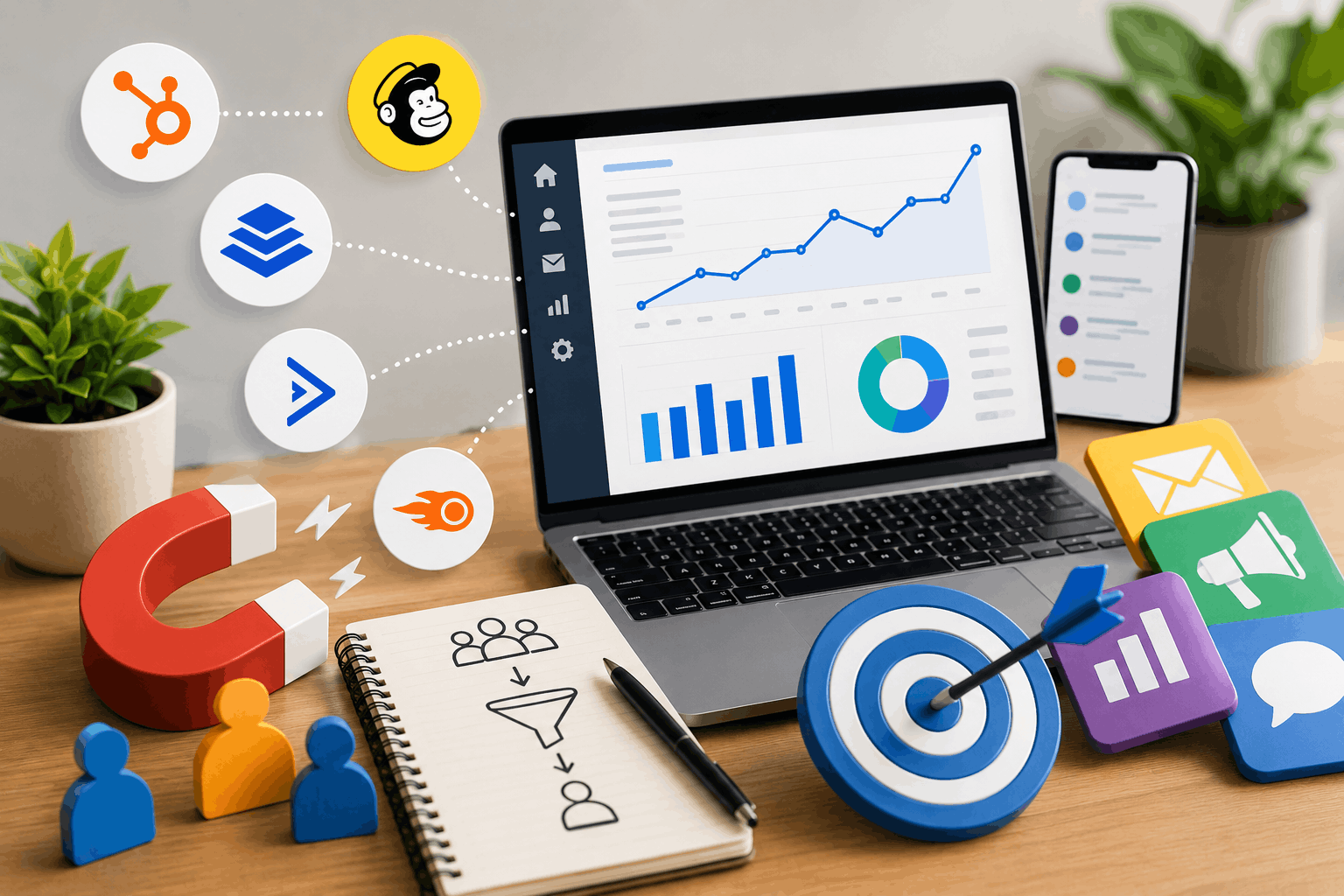
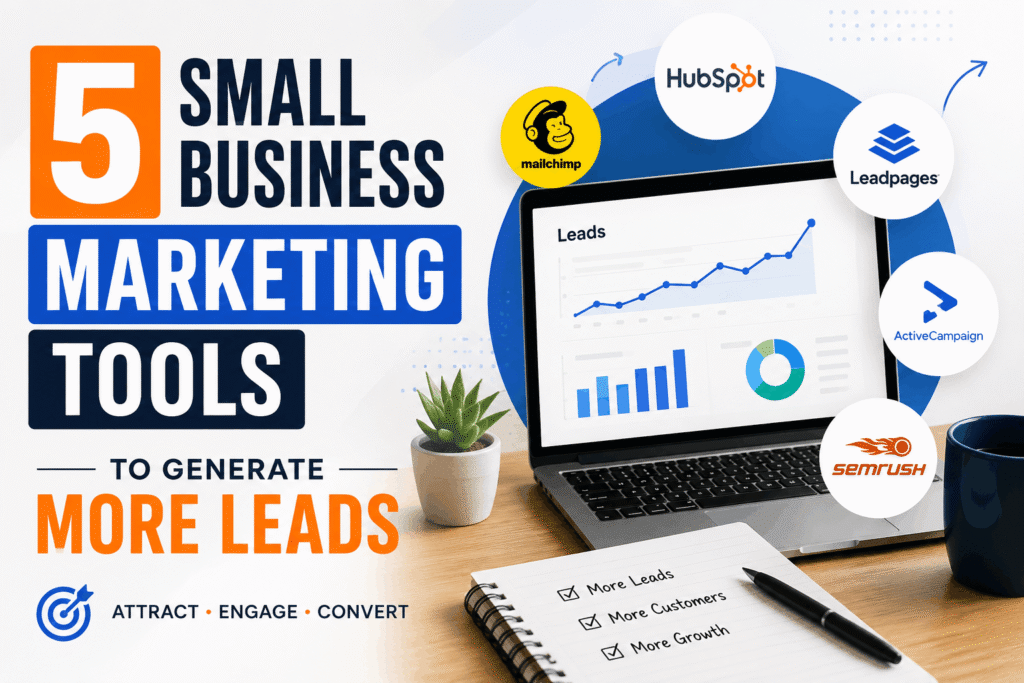
Here are five small business marketing tools that can help you capture more leads, stay organized, and turn more inquiries into real conversations.
1. HubSpot CRM
Many small businesses start with spreadsheets because they’re free and familiar.
That works for a while.
Then the contact list grows. Multiple team members start talking to prospects. Follow-up tasks pile up. Suddenly, nobody knows who last spoke with the lead.
HubSpot CRM solves that problem by keeping customer information in one place.
You can track form submissions, email conversations, meetings, and website activity from a single dashboard. When someone shows interest in your business, their details are automatically recorded, making follow-ups much easier.
Key Features
- Contact management
- Lead tracking
- Email monitoring
- Meeting scheduling
- Sales pipeline management
For businesses that want a clear picture of every lead without building a complicated system, HubSpot is often a practical starting point.
2. Mailchimp
Email remains one of the most reliable channels for turning prospects into customers.
The challenge isn’t sending emails.
It’s sending the right message at the right time.
Mailchimp allows small businesses to create email campaigns, build subscriber lists, and automate follow-up sequences. Instead of manually emailing every new lead, you can create a series of messages that introduce your business, share useful information, and encourage action.
A local fitness studio, for example, could automatically send a welcome email, a free workout guide, and a discounted membership offer over several days.
Key Features
- Email campaign builder
- Audience segmentation
- Automated email sequences
- Landing pages
- Campaign reporting
Consistent communication often makes the difference between a forgotten lead and a paying customer.
3. Leadpages
Traffic alone doesn’t create leads.
Visitors need a reason to take action.
Leadpages focuses on one job: helping businesses build landing pages designed to collect contact information. Whether you’re promoting a webinar, free consultation, discount offer, or downloadable guide, Leadpages lets you launch pages without hiring a developer.
The drag-and-drop editor keeps things simple, which is especially useful for business owners who manage their own marketing.
Key Features
- Landing page builder
- Lead capture forms
- Pop-ups and alert bars
- Mobile-friendly templates
- Conversion tracking
A well-designed landing page often outperforms a standard website page for lead generation.
4. ActiveCampaign
Not every lead is ready to buy immediately.
Some need weeks. Others need months.
ActiveCampaign helps businesses stay in touch during that process without manually managing every interaction.
The platform combines email marketing with customer relationship management features, allowing businesses to create personalized follow-up journeys based on customer behavior.
For instance, if someone downloads a pricing guide but doesn’t request a consultation, ActiveCampaign can automatically send additional information that answers common questions and keeps the conversation going.
Key Features
- Email automation
- Customer segmentation
- Lead scoring
- CRM integration
- Behavioral tracking
Businesses with longer sales cycles often find this type of automation particularly useful.
5. Semrush
Lead generation starts long before someone fills out a form.
People need to find your business first.
Semrush helps small businesses identify what potential customers are searching for online. By understanding search demand, businesses can create content, optimize website pages, and attract visitors who are already looking for solutions.
A plumbing company, for example, might discover that local customers frequently search for emergency repair services. That insight can guide website content and improve search visibility.
Key Features
- Keyword research
- Competitor analysis
- Site audits
- Content planning
- Position tracking
When more qualified visitors reach your website, lead generation becomes much easier.
Choosing the Right Tool
Not every business needs all five tools.
A solo consultant may only need a CRM and email platform. An eCommerce brand might focus heavily on landing pages and automation. A local service business may benefit most from search-focused tools.
Start with the biggest bottleneck in your current process.
If leads are disorganized, choose a CRM.
If follow-ups are inconsistent, focus on email automation.
If website visitors aren’t converting, look at landing page software.
The best tool is the one that solves the problem slowing your growth right now.
Final Thoughts
Most small businesses don’t lose leads because of a lack of effort.
They lose them because information slips through the cracks, follow-ups happen too late, or prospects never receive the next message they were expecting.
The tools above help close those gaps.
Used correctly, they can make lead generation more predictable, give your team better visibility into customer activity, and create a smoother path from first contact to paying customer.