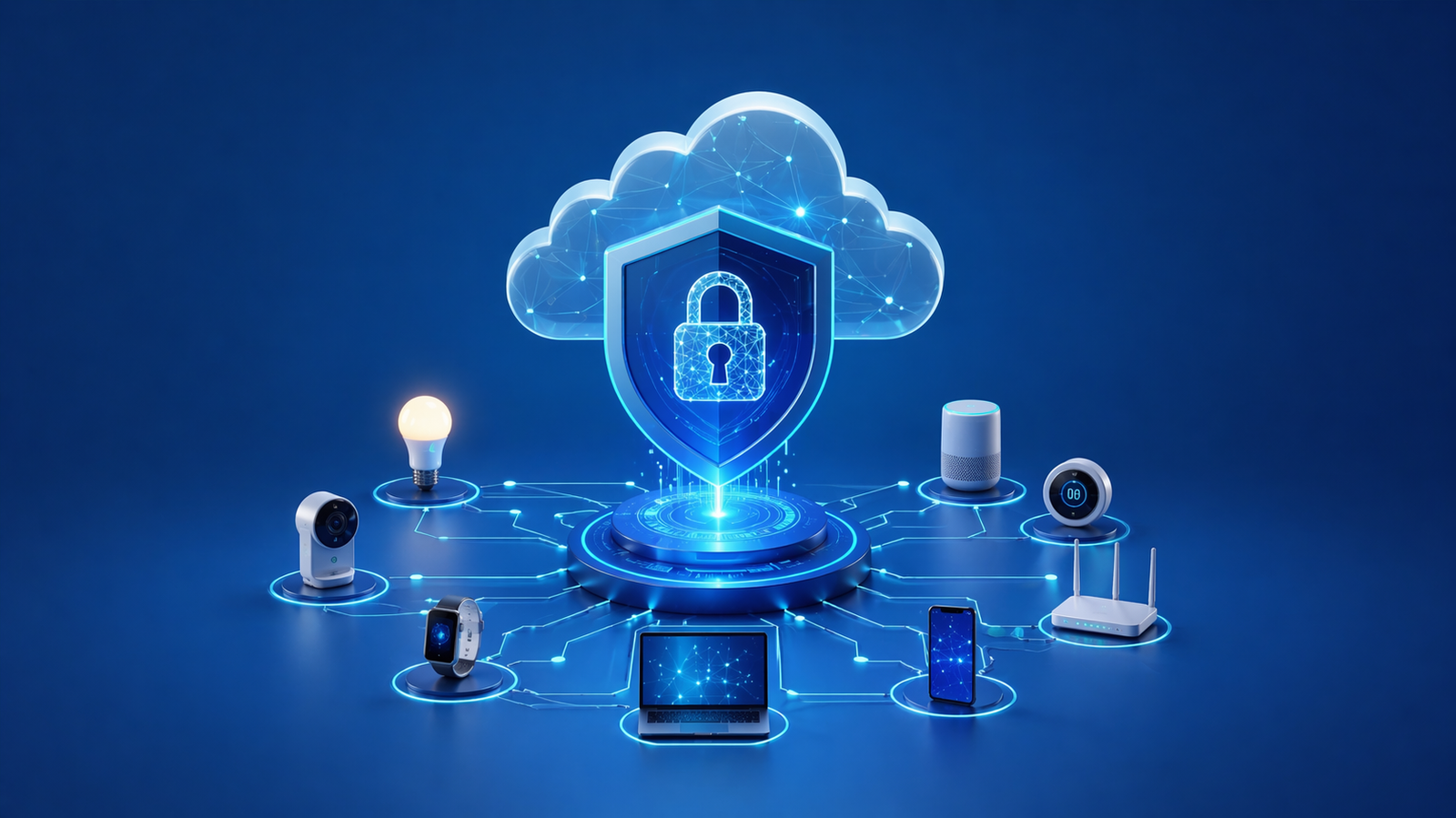
Let’s be real, your smart thermostat, factory sensors, connected medical devices, and even the fleet of delivery drones all talk to each other nonstop. The Internet of Things (IoT) has quietly become the backbone of how we live and work in 2026. But here’s the uncomfortable truth: most of these devices are still protected by encryption that quantum computers could one day crack like it’s a cheap padlock.
That’s exactly why Post-Quantum Authentication for IoT isn’t some futuristic buzzword anymore. It’s the practical upgrade you need to keep your connected world safe from tomorrow’s threats today. When you pair it with cloud-based systems, you get something even better: strong security that doesn’t slow down your devices or blow up your budget.
If you’re running a business that relies on IoT, whether it’s a smart warehouse, a connected healthcare operation, or an entire smart city rollout, you already know the stakes. One breach and you’re dealing with stolen data, downtime, regulatory fines, and a serious hit to customer trust. The good news? Cloud-assisted post-quantum solutions are here to change the game.
Why IoT Security Needs a Post-Quantum Approach Right Now
IoT devices live in tough spots. They’re often cheap, battery-powered, scattered across factories, farms, or homes, and designed to run for years with minimal updates. Traditional encryption like RSA or ECC has served us well, but quantum computers change everything. Once they scale up, they can solve the math problems that keep today’s encryption secure in a matter of hours or even minutes.
Post-Quantum Authentication for IoT flips the script. It uses new cryptographic methods specifically built to withstand quantum attacks. These aren’t theoretical; they’re based on hard math problems (like lattice structures) that even a powerful quantum machine struggles with.
Think about it this way: many IoT devices have a 10- or 15-year lifespan. If you deploy something today that gets compromised in 2030, you’re looking at massive replacement costs and a ton of risk in the meantime. Quantum-resistant encryption gives you that long-term peace of mind. It protects everything from firmware updates to device-to-cloud communication, so your data stays yours even as the threat landscape evolves.
U.S. businesses are feeling this pressure especially hard. From critical infrastructure to healthcare and manufacturing, regulators and customers now expect future-proof security. Adopting these IoT security solutions early isn’t just smart; it’s becoming table stakes for staying aggressive and compliant.
How the Cloud Supercharges IoT Security
Here’s where things get sincerely thrilling. IoT gadgets are typically small and resource-limited; they don’t have the processing power or memory to handle heavy cryptographic computations on their own. That’s precisely why cloud-assisted protection is one of these game-changers.
Instead of forcing every little sensor or camera to do all the heavy lifting, the cloud handles the complex computations. Your devices ship only sufficient data to a stable cloud environment, where post-quantum algorithms handle authentication and encryption. The device receives a lightweight “sure, you are precise to head” response, and the whole device remains fast and efficient.
Cloud structures additionally allow real-time threat detection. They can watch styles across lots, or even hundreds of thousands, of devices right now, spotting something suspicious before it turns into a full-blown attack. Unusual login attempts? Sudden spikes in data visitors?
The cloud flags it instantly and can trigger automated responses.
Plus, updates become painless. Need to roll out a new security patch or adjust your quantum-resistant settings? The cloud pushes it out seamlessly, no truck rolls or manual device visits required. This centralized yet scalable approach is what makes cloud-assisted security one of the most practical IoT cybersecurity advances today.
Key Technologies Powering Post-Quantum Authentication
You don’t need a PhD to understand the basics, but knowing what’s under the hood helps you make smarter decisions. Post-quantum cryptography relies on a few proven approaches that NIST has already standardized and that are being deployed in real systems today.
Lattice-based cryptography is leading the pack. It’s efficient, secure, and serves as the foundation for algorithms such as ML-KEM (for key exchange) and ML-DSA (for digital signatures). These are the same ones NIST finalized a couple of years ago, and those companies are now integrating them into everything from TLS connections to device authentication.
Hash-based signatures offer another rock-solid option. They’re simple, reliable, and especially useful for signing firmware updates or securing one-time communications. Because they rely on basic hash functions, they’re resistant to quantum tricks and relatively lightweight to implement.
Multivariate polynomial cryptography rounds things out by using increasingly complex math puzzles that are easy to solve one way (for legitimate clients) but brutally hard the other way, even for quantum computers. Together, those eras create a layered defense that is tough to break.
The real magic happens when you integrate them into hybrid systems, pairing a tested and authentic classical approach with a setup quantum one. This “belt and suspenders” method offers you security and destiny-proofing at once, which is exactly why it’s becoming favored in IoT deployments.
The Big Benefits of Cloud-Assisted Post-Quantum Authentication
When you supply cloud energy collectively with those quantum-resistant techniques, the blessings stack up quickly:
- Stronger, destiny-proof protection: Your devices stay strong against both modern-day hackers and tomorrow’s quantum threats. No more traumatic about “harvest now, decrypt later” assaults, wherein horrible actors hold encrypted statistics nowadays to crack them years from now.
- Scalability without the headache: Whether you’ve got 500 sensors or 500,000, the cloud handles the load. Security scales with your deployment rather than your order, avoiding bottlenecks.
- Lower costs in the long run: You avoid expensive hardware upgrades on every single device. The cloud does the heavy math, so your edge devices can stay cheap and power-efficient.
- Better visibility and control: Centralized dashboards show you exactly what’s happening across your entire IoT fleet. You get clear insights into anomalies, compliance status, and overall security health.
- Easier compliance and trust: With built-in support for standards like NIST’s post-quantum algorithms, you’re in a much stronger position for audits, regulations, and customer reassurance.
Businesses that make this switch often report fewer incidents, faster incident response, and the confidence to innovate without constantly looking over their shoulder.
Real-World Challenges (and How to Handle Them)
No technology is perfect, and post-quantum IoT security comes with honest hurdles. The biggest one? Many existing devices weren’t built with these bigger keys and more complex math in mind. Performance can take a hit if you try to run everything locally, leading to higher power consumption, slower response times, and larger memory requirements.
Compatibility is another pain point. Your current IoT ecosystem might use older protocols that don’t play nice with new quantum-resistant methods right out of the box. And let’s not sugarcoat it: upgrading fleets of devices already deployed in the field isn’t cheap or simple.
Then there’s the standardization curve. While NIST standards are now in place and being adopted quickly, not every vendor has fully implemented them yet. You also need to consider training your team and securing buy-in across departments.
The smart move? Start with a pilot on non-critical devices, choose crypto-agile solutions that let you swap algorithms later if needed, and lean heavily on cloud-assisted models to minimize hardware load. Many organizations are finding that a hybrid approach mixing old and new crypto during the transition gives them the best of both worlds without ripping everything out at once.
Where IoT Security Is Headed Next
The momentum is building fast. We’re already seeing hybrid cryptographic systems become the norm, blending classical and post-quantum methods. Hence, you get security today and protection tomorrow. AI is stepping in too, analyzing device behavior in real time to predict and block threats before they happen.
Blockchain-style ledgers combined with post-quantum cryptography are starting to show up for tamper-proof device identity and data integrity. And cloud providers are rolling out native support for these algorithms, making it easier than ever for businesses to adopt them.
By 2030, experts expect the majority of new IoT deployments to be quantum-ready by default. Organizations that get ahead of the curve now will avoid the painful (and expensive) scramble later. They’ll also be in a stronger position to win contracts, build customer loyalty, and protect the data that powers their operations.
Enhancing IoT Security
The IoT revolution is only accelerating, but so are the risks. Traditional encryption won’t cut it in a world where quantum computing is moving from labs into reality. Post-Quantum Authentication for IoT, especially when powered by smart cloud assistance, gives you a practical, scalable way to stay ahead.
It protects your gadgets, your statistics, and your recognition. It reduces guide headaches and destiny-proofs your infrastructure. And most importantly, it lets you keep up with related technology without constantly worrying about
If you are responsible for IoT systems in your business, now is the time to start comparing quantum-resistant alternatives. The organizations that treat this as a strategic priority these days are the ones operating securely, efficiently, and optimistically in the years ahead. Your related atmosphere merits nothing but a good buy, a good deal less.