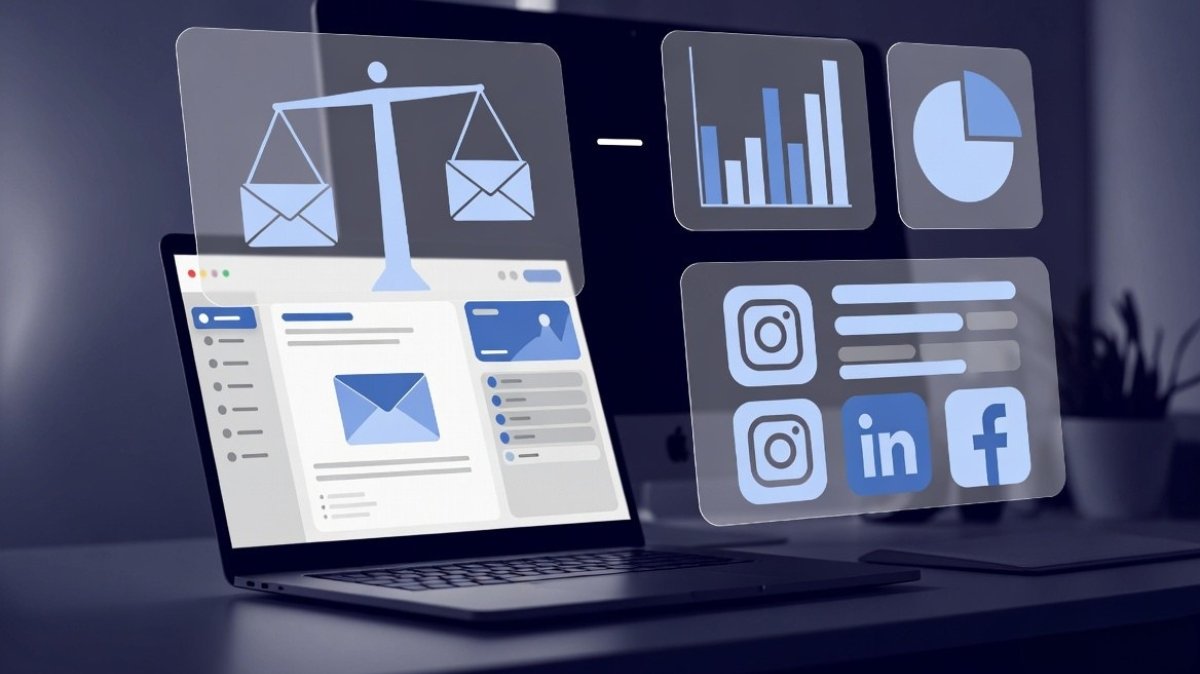
If you run a small business, you’ve probably asked yourself the same question many owners face: Should I focus more on email vs social media marketing? The choice between email and social media marketing tools is one of the most common dilemmas for SMBs because both channels can bring in customers. Still, they work very differently and require different time and money investments.
I’ve talked to a lot of small business owners over the past couple of years, from e-commerce stores and service businesses to consultants and local shops. Almost all of them are trying to figure out the same thing. They want to know which approach actually delivers better results for the effort they put in. In this guide, I’ll share what I’ve seen working in real life, the strengths and weaknesses of each, and how to decide what makes the most sense for your business right now.
Why the Email vs Social Media Marketing Tools Debate Matters So Much for Small Businesses
Small businesses don’t have unlimited time or budget. Every hour you spend on marketing needs to produce real returns. That’s why understanding email vs social media marketing tools is important.
Social media is great for visibility and building awareness. You can reach new people quickly, get instant feedback, and create a personality for your brand. But the algorithm controls how many people actually see your posts, and engagement can be unpredictable.
Email marketing, on the other hand, gives you direct access to people who have already shown interest in your business. When someone joins your email list, they’re permitting you to reach them. The open rates and conversion rates are usually much higher than social media, and you own the list; no algorithm can take that away from you.
Many small business owners I speak with end up using both. Still, they often put too much time into social media because it feels more “active” and visible. At the same time, email quietly brings in more consistent sales. The right balance depends on your industry, your audience, and what stage your business is in.
How Email and Social Media Marketing Tools Actually Compare in 2026
Let’s look at the practical side of what each channel really offers small businesses today.
Reach and Visibility Social media wins on reach. Platforms like Instagram, LinkedIn, and TikTok let you get in front of new people every day. However, organic reach has dropped significantly, so many businesses now pay for ads to get seen. Email has a lower reach but much higher quality. The people on your list are already interested in what you do.
Cost Social media can feel free at first, but to get consistent results, most small businesses end up spending on ads. Email marketing tools have very low ongoing costs once you build your list. Tools like Mailchimp, ConvertKit, and Brevo have generous free tiers, and even paid plans are usually cheaper than running effective social ads.
Control and Ownership: This is where email wins clearly. You own your email list. If Instagram changes its algorithm or shuts down your account, you still have direct access to your audience. With social media, the platform owns the relationship.
Engagement and Conversion Email generally have much higher conversion rates. People open emails with intent. Social media engagement is often lighter, with likes, comments, and quick scrolls. Many small businesses report that email consistently brings in more sales per message than social posts.
Time Investment: Social media can become a time sink because it feels like you need to post every day and respond to comments. Email marketing can be batched. You can plan and schedule a month’s worth of emails in a few hours.
The Tools Small Businesses Are Actually Using for Email and Social Media
Small teams don’t need fancy enterprise platforms. Here are the tools that are working well right now:
For Email Marketing:
- Mailchimp: Still the easiest for beginners
- ConvertKit: Great for creators and relationship-focused businesses
- Brevo: Excellent if you want email + SMS
- Klaviyo: Best for ecommerce stores
For Social Media Marketing:
- Buffer or Later: For scheduling and planning
- Meta Business Suite: For running Facebook and Instagram ads
- Hootsuite: For managing multiple accounts
- CapCut or Canva: For creating quick video and graphic content
Most a success small corporations use a simple aggregate: one excellent email device and one or more social media platforms in which their customers surely engage.
Which One Wins for Most Small Businesses?
After searching at real results from many small companies, right here’s what I’ve observed:
Email marketing generally wins for consistent sales and long-term consumer relationships. It’s extra predictable, has better ROI, and you own the audience.
Social media wins for brand attention, achieving new people, and constructing network. It’s fantastic for visual corporations or when you need to develop your target audience fast.
The smartest approach most small businesses take is not choosing one over the other; it’s using them together in a smart way. Use social media to attract new people and grow your email list. Use email to nurture those relationships and turn them into paying customers.
Many owners tell me they get 60-80% of their sales from email, even though they spend more time on social media. That’s a common pattern.
How to Build a Simple Marketing Strategy That Actually Works
You don’t need to master both channels perfectly. Here’s a practical starting point for small agencies:
- Pick 1-2 social systems where your best customers spend time.
- Focus on growing content that encourages people to enroll in your email list.
- Build a simple email collection that welcomes new subscribers and presents a fee.
- Use e-mail as your foremost income channel and social media as your consciousness channel.
This method maintains things plausible and gives you the blessings of both email vs social media marketing without spreading yourself too thin.
The key is to stop treating social media as your only marketing channel. Use it to grow, but rely on email for the relationship and revenue part.