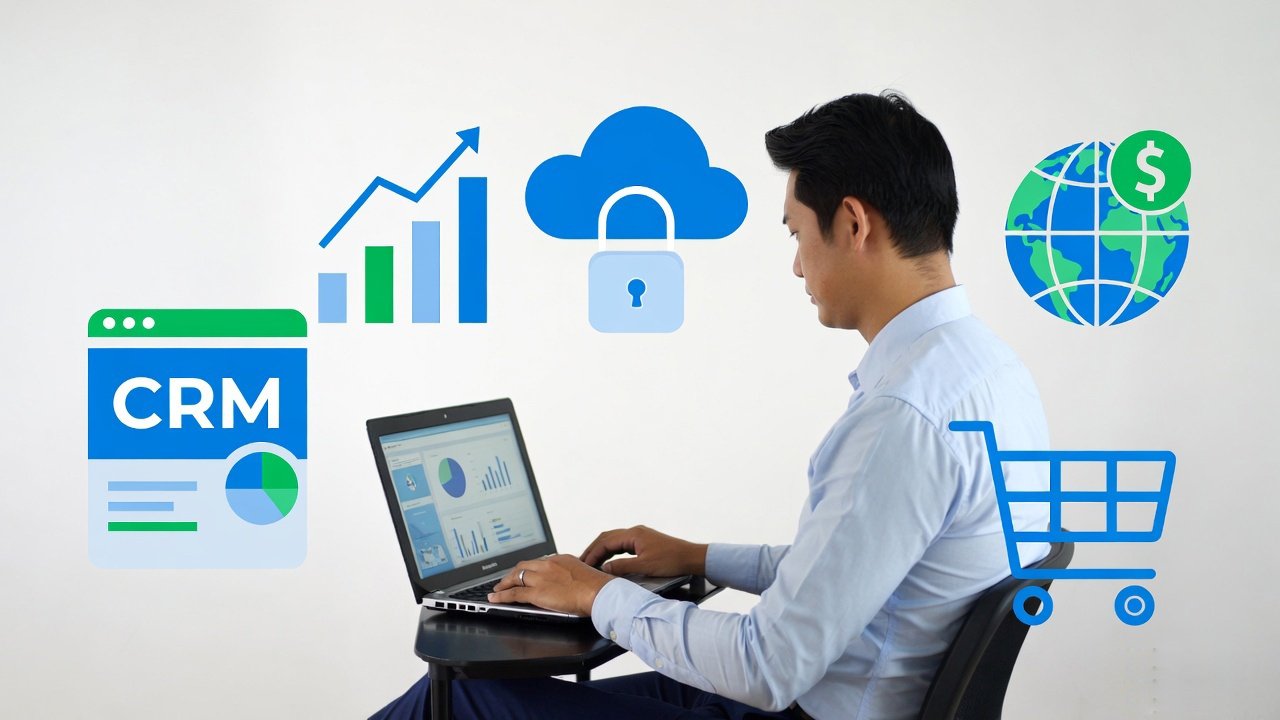
If you’re running a small commercial organization right now, you recognize how chaotic matters get with out a proper device for tracking customers, following up on leads, and very last deals. Spreadsheets and random notes sincerely don’t reduce it anymore especially in 2026 while consumers anticipate rapid, personalised responses and your organization might be juggling 5 equipment immediately. That’s precisely why finding the best CRM for small businesses can feel like a recreation-changer. It organizes everything, saves hours each week, and in fact enables you are making more money rather than actually together with a few different subscription.
I’ve looked at dozens of options over the years, tested many myself, and talked to real owners who switched and never looked back. The truth? Not every “top” CRM lives up to the hype for small teams. Some are bloated with features you’ll never use, others get insanely expensive as you grow, and a few are so complicated that your staff avoids them. But a handful stand out because they balance ease, price, and real power without overwhelming you.
Let’s start with the one most small businesses should at least try first.
Why HubSpot CRM Often Ends Up as the Best CRM for Small Businesses (Especially If You’re Starting Out)
HubSpot gives you a genuinely free CRM forever no hidden catches on the core stuff. You get unlimited users, contact management, deal tracking, email tracking, and even basic reporting. For a solo founder or a team under 10 people, this is huge.
✓ You set it up in an afternoon and actually start using it the same day no endless training videos needed.
✓ It connects smoothly with your website, email, and tools you already love. And if you ever want to add marketing automation or better sales sequences later, everything scales in one place without switching platforms.
Of course, nothing’s perfect.
✗ The free plan caps some advanced automations and adds HubSpot branding to emails, which might feel unprofessional as you grow bigger.
Paid upgrades kick in around $20–$50 per user once you need more firepower, and yes, it can get pricey down the line if you’re not careful. Still, for most small businesses in 2026, it remains one of the smartest starting points because you pay nothing until you actually need the extras.
Other Strong Contenders That Might Fit You Better
If visual pipelines are your thing meaning you love dragging deals from “New Lead” to “Closed Won” like moving cards on a board Pipedrive feels almost addictive. It’s built purely for sales focus, so there’s no distracting extra fluff.
✓ Super intuitive interface that your team adopts quickly.
✓ Great mobile app for on-the-go updates.
✓ Solid automations without complexity.
Pricing starts reasonable (around $14–$24 per user), but ✗ no true free tier, so it’s best if you’re already committed to consistent sales tracking.
Then there’s Zoho CRM (or its lighter version, Bigin). This one punches way above its price. ✓ Tons of customization on a budget—free for up to three users, and paid plans stay low even as you add people.
✓ Built-in AI (Zia) that predicts which leads are hot and suggests next steps.
✓ Integrates with everything under the sun.
It’s especially convincing for growing teams who want power without Salesforce-level costs. The downside?
✗ Setup takes a bit longer if you dive into custom fields, and support can feel slower on free plans.
Freshsales brings some nice AI magic too like auto-prioritizing leads based on behaviour which saves real time. And if you want dead-simple organization without bells and whistles, tools like Less Annoying CRM or Capsule keep things refreshingly straightforward.
How to Pick the Right One Without Regretting It Later
Think about your biggest pain point today. Are leads falling through cracks because follow-ups get forgotten? Go visual with Pipedrive. Need free forever to test the waters? Start with HubSpot. Want deep customization and AI help on a tight budget? Zoho is hard to beat.
Whatever you choose, the best CRM for small businesses in 2026 isn’t the one with the most features it’s the one your team will actually use every day. Grab a free trial (most offer them), import a few contacts, and run a real week with it. You’ll know pretty fast if it’s a fit.
Want to make the decision even easier? Download our free SaaS Buyer Guide and Comparison Checklist inside the Resources section. It walks you through exact questions to ask during demos, red flags to watch for, and a simple scoring template so you compare apples to apples. No fluff just practical help to land on the perfect tool faster.
Which one are you leaning toward right now? Drop a comment below or subscribe to get more honest software breakdowns like this straight to your inbox. Let’s make running your business a little less chaotic in 2026.